







Why your water heater makes popping noises in Maryland

Tell a local repair pro what your water heater is doing.

Get my match

Why does my water heater make popping noises?

You hear it most when the tank is heating up, a crackling or popping sound coming from somewhere inside. It's not dangerous, but it's not nothing either, and you'd rather understand what it means now than wait for it to turn into a bigger repair.

Sediment has built up at the bottom of the tank

Maryland water carries minerals that settle out as sediment over time, and that layer sits at the bottom of the tank where the burner or heating element is. When the water underneath it heats up, steam bubbles form and push through the sediment, and that's the popping you hear. Electric water heaters, which most homes here use, trap sediment right around the lower heating element, so the noise often shows up there first. Left alone, the buildup makes the element work harder to heat the same amount of water, and that shows up on a power bill in a state where electricity already costs more than it does in a lot of places. The noise itself won't damage the tank quickly, but it's worth having checked before the sediment hardens further.

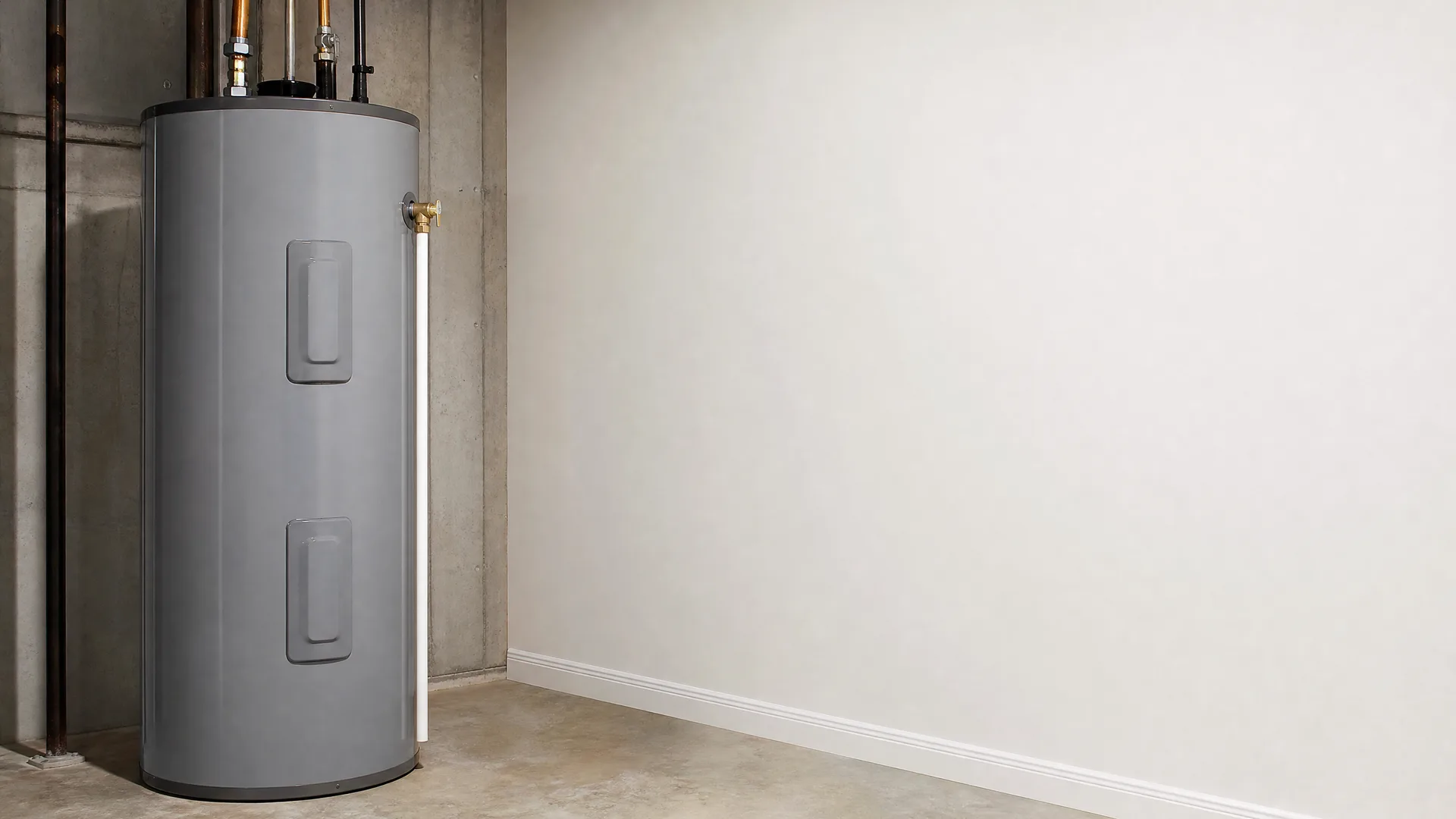
A gray cylindrical electric water heater with two access panels stands in a corner of a room with a concrete floor, connected to overhead pipes and a white drain pipe, beside a plain light-colored wall.

What's actually popping

Sediment settles at the bottom of the tank, below the heating element or over the burner. Water gets trapped under that layer, and when the element or burner heats it, it turns to steam and pushes up through the sediment. That's the pop you hear. The harder your water, the faster this layer builds. It thickens over time, and the popping usually gets louder as more of it collects.

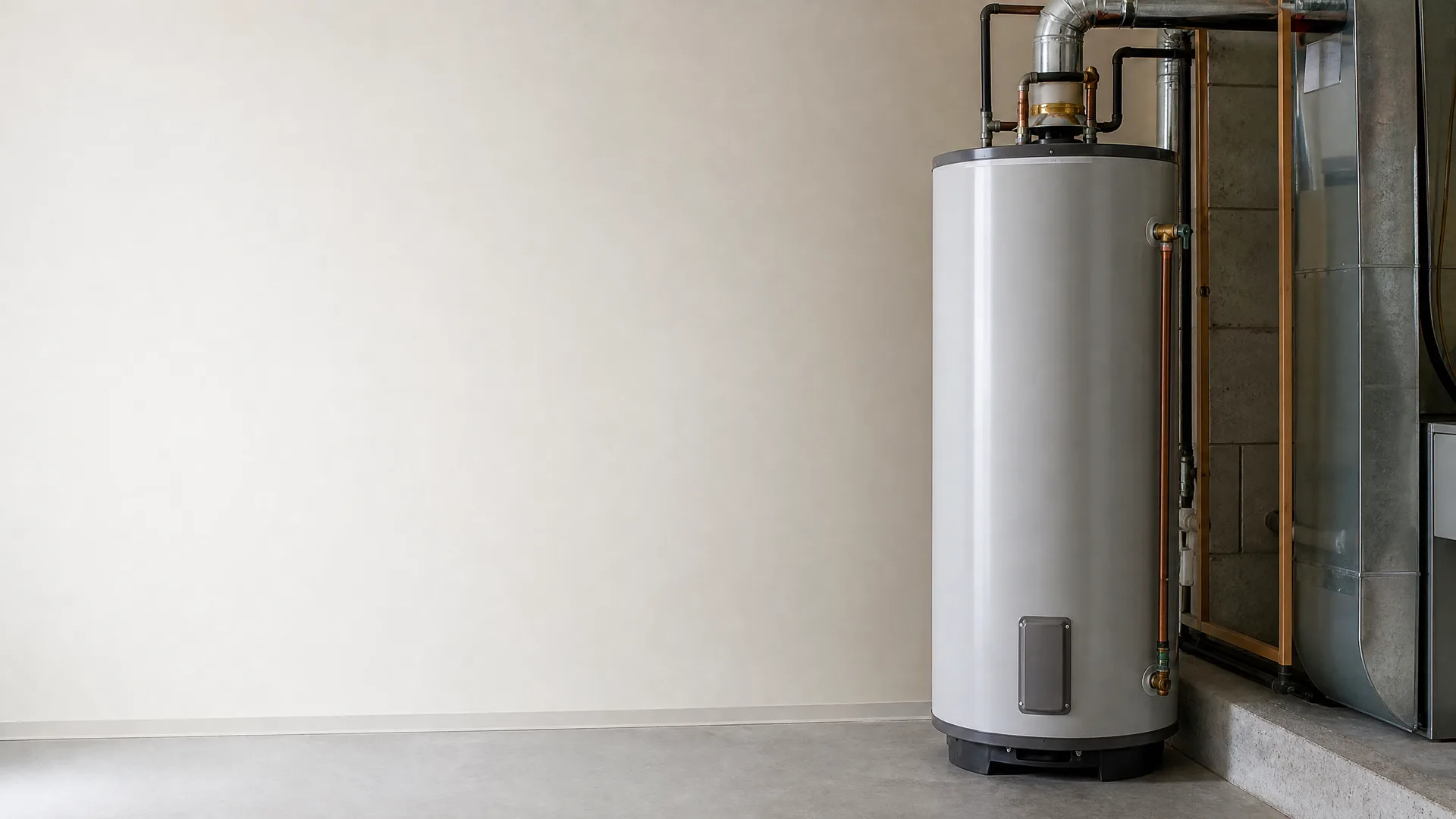
A tall cylindrical water heater with copper and metal pipes at its top stands against a plain beige interior wall on a concrete floor, beside ductwork and a raised concrete step.

Why it costs you now

That sediment sits between the heating element and the water, so the element has to work harder and longer to heat the same tank. Most homes in Maryland heat water with electricity, and with power priced the way it is, a tank running longer than it should shows up on the bill. The noise is the first sign. The higher cost arrives quietly, a little at a time, before anyone connects the two.

A smiling man in a denim shirt and white t-shirt stands in an open dark doorway of a stucco house, facing a woman with long brown hair and a green jacket seen from behind in the foreground.

What it means for your tank

That layer of sediment sits between the element and the water it's supposed to heat, so the element works harder and stays on longer to get the same result. Electric rates in Maryland aren't cheap, and a tank that runs long cycles shows up on the bill whether you've noticed the popping or not. Left alone, the sediment keeps building, and the banging tends to get louder, not quieter, over time.

The bigger risk is to the tank itself. That trapped steam pushes against the bottom of the tank, and over months and years, that kind of stress wears on the metal and the glass lining inside it. Once you've heard it for a while, it stops being a thing to monitor and becomes a repair worth getting ahead of. If you'd rather have someone look at it than wait and see, a plumber matched to your situation can tell you what's going on in your tank specifically and reach out to talk through what it would take.

Interior corner of a room with a window and sheer curtain at left, a gray upholstered sofa with a cushion at right, and a round wooden table holding stacked books and a round vase with an olive branch.
A woman in a gray turtleneck sweater stands by a window looking outside at snowy ground, with a dimly lit living room containing a sofa, shelves, lamp and a lit candle behind her.
A woman in a cream cable-knit turtleneck sweater stands in a warmly lit living room with a fireplace and shelves behind her, looking out a window toward snow-covered trees and a railed deck.
A woman in a cream knit turtleneck sweater stands by a window looking out at snow, with a lit fireplace, sofa and lamp in the room behind her.
A woman in a gray knit sweater sits by a window looking out at falling snow, with a dimly lit living room containing a sectional sofa, pillows, a lamp and houseplants behind her.

Get the right pro for your water heater

A tank that's been popping for a while doesn't fix itself. The sediment stays put, and it keeps building unless someone flushes it out or, if it's packed in deep, checks whether the tank's still holding up underneath it. Maryland's humid summers mean your water heater runs most of the year without a break, and every cycle on a sediment-lined tank costs more than it should on an electric rate that isn't getting any cheaper. You don't have to figure out whether this is a quick flush or something more before you call anyone. A licensed contractor can listen to it, look at the tank, and tell you what's actually going on down there. Send the request and that part of it is off your plate. You'll hear from someone who handles this kind of call regularly, and you can ask them what you've been hearing and what to do about it.

How the noise builds over time

  • Electric water heaters have two elements, one near the top and one near the bottom, and sediment collects around the lower one first.
  • The popping starts low in the tank and gets louder as more sediment builds under that bottom element.
  • A gas tank makes the same noise differently, since the burner sits under the tank and heats the sediment layer from below.
  • Each pop is a small pocket of steam breaking through the sediment and collapsing back into the water around it.
  • The sound changes over time, from a few scattered pops to something closer to a steady rumble as the layer thickens.
  • Tanks with a glass lining are more likely to crack under that trapped heat than ones without it.

An electric water heater has two elements, one up near the top of the tank and one down near the bottom. Sediment settles to the floor of the tank first, so it surrounds the lower element long before it touches the upper one. That's why the popping starts quiet and low, almost easy to miss, before it works its way into something you notice every time the tank runs. A gas unit gets there a different way. The burner sits underneath the whole tank, so the sediment layer sits right on top of the heat source instead of around a coil, and the steam pockets form across the bottom all at once rather than around one spot. Either way, what you're hearing is small pockets of water flashing to steam under that layer and collapsing back into the water above it. One pocket breaking through sounds like a pop. A few years of sediment built up means dozens of them going off while the tank heats, which is why the sound can turn from occasional pops into something closer to a rumble. Tanks lined with glass are worth paying attention to here. That lining doesn't handle trapped heat as well as an unlined tank does, and it can crack under the stress of steam pushing against it from below, which turns a noise problem into a leak problem.

44.1% of homes statewide heat with electricity

Most homes in Maryland run on electric water heaters, not gas. That means the popping you hear is almost always sediment sitting on a lower heating element, working against it cycle after cycle. An electric tank left that way runs longer to heat the same water, and on Maryland electric rates that shows up on your bill.

ACS 2020-2024 5-year B25040

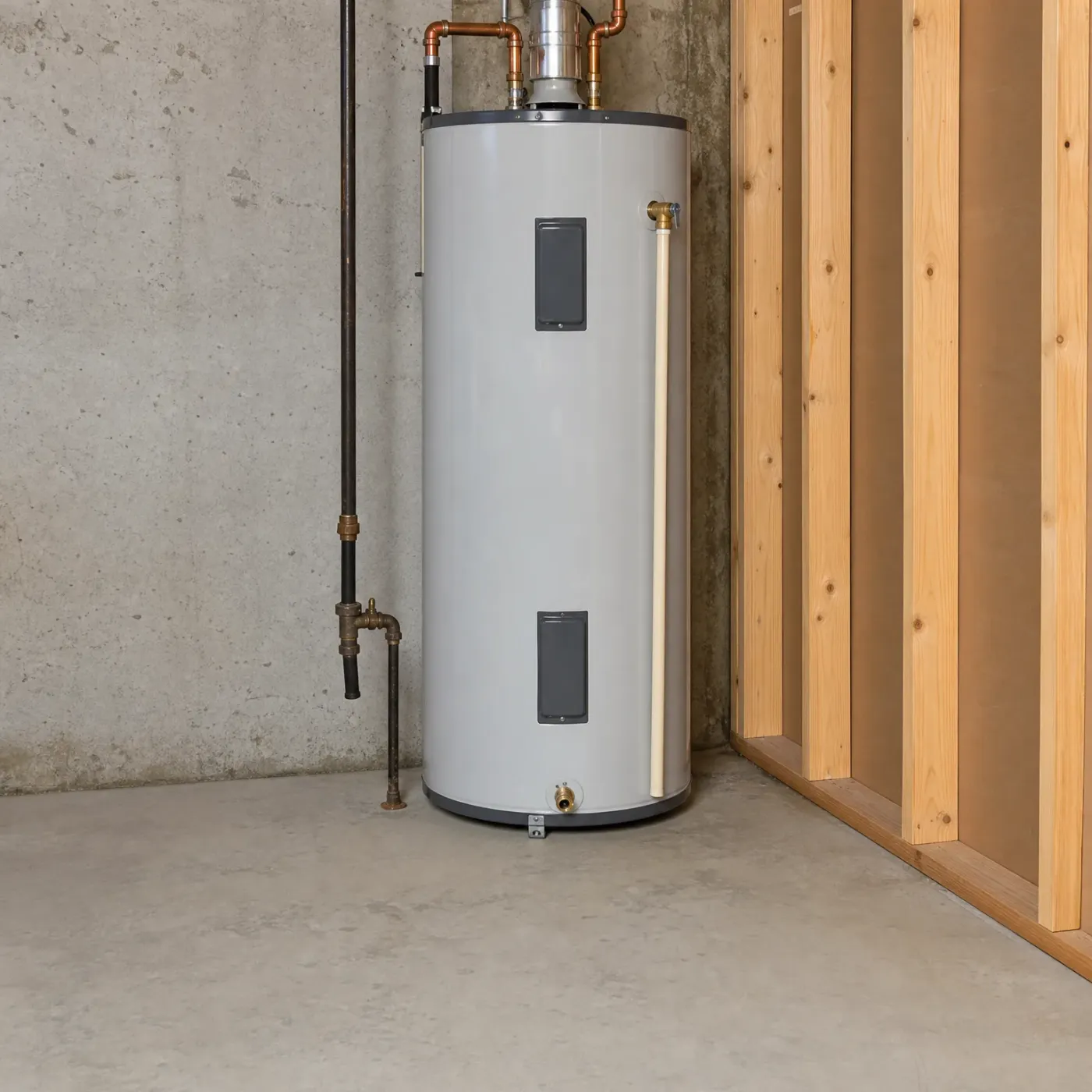
A light gray cylindrical water heater with two access panels stands on a concrete floor against a concrete wall, with copper and black pipes beside it and an unfinished wood stud wall to the right.

Still working, worth checking

This tank still heats the way it should, with clean panels and no rust at the base. Popping now doesn't mean trouble yet. A flush at this stage clears the sediment before it has a chance to pack in around that lower element.
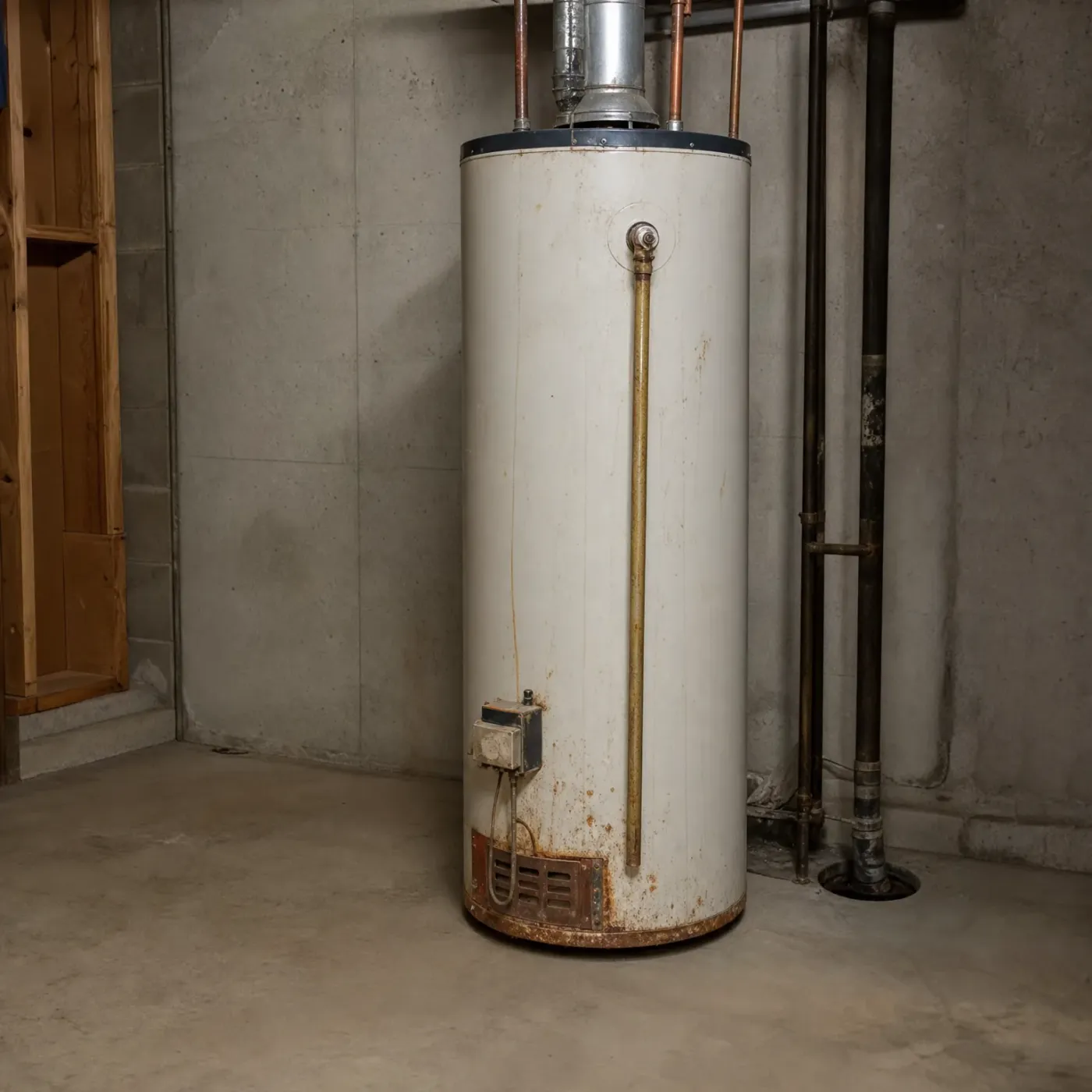

An older white gas water heater with rust staining and an exposed vertical pipe stands against a concrete block basement wall, with a metal flue above and black vertical pipes to the right.

Rust tells you sediment's been there a while

That rust along the base is what years of settled sediment can do once it sits against the tank wall. By the time you see discoloration like this, a flush alone may not be enough. Someone needs to check what's left underneath.

The popping sound is sediment, sitting on the lower element and getting in the way of the water it's supposed to heat. Left alone, it builds, the element works harder, and the electric bill carries that cost month after month. A flush clears it out while the tank is still sound underneath. Waiting longer only gives it more time to pack in. Once you send the form, you're done hunting for someone to call. A contractor who handles this gets matched to you and reaches out, and from there it's their job to sort out, not yours. That's the part worth knowing: the popping has an answer, it's not expensive to check, and you don't have to be the one who tracks down who does it.

A single-story stucco house at dusk with a lit paver walkway lined by low path lights, desert plants and boulders in front, and distant mountains under an orange and blue sky.

Water Heater Repair

A pro who works on water heaters

Step 1 of 3: Equipment
  • A ceramic vase holding leafy green branches and a shallow wooden bowl sit on a wooden window ledge beside a sunlit window, with a cream upholstered chair and knit throw in the foreground.
    • A local pro who knows water heaters gets your details and gets in touch.
  • Sunlit living room corner with a beige upholstered sofa, a round wooden side table holding a ceramic vase of olive branches, linen curtains at a window, a floor vent in the baseboard, and a woven jute rug on hardwood flooring.
    • After you send the request, you're done searching.
    • Send the request today and stop worrying about who to call.
  • A wooden side table with a single drawer holds a shallow carved wood bowl and a white ceramic vase of green eucalyptus stems, beside a window and an upholstered chair draped with a cream knit throw.
    • Describe what your water heater is doing once, in one form.
    • Answer a few questions instead of calling shop after shop.
  • Corner of a house with horizontal siding, a white-framed window and stone veneer base, beside a covered entry with wooden steps, a potted plant, mulched beds of green shrubs and a flagstone path.
    • Your request stays with one local pro.
    • Your request goes to one pro, not a list of companies.



