What a sound tank looks like
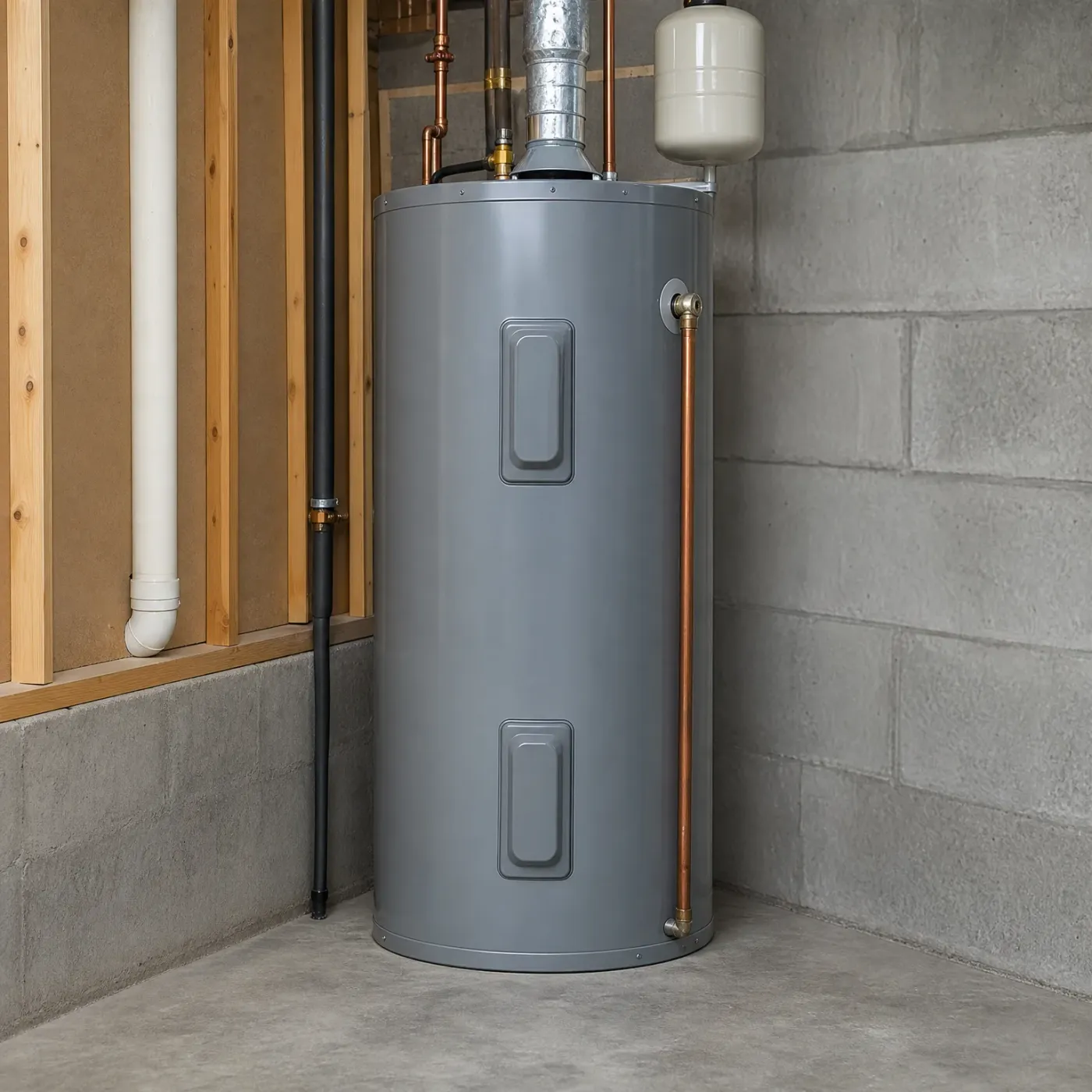
A gray electric water heater like this one has no rust streaking down the tank, no puddle at the base, and dry fittings at the drain valve and the relief pipe. The floor underneath stays dry.
 Match me with a pro
Tell a local repair pro what your water heater is doing.
Water pooling at the base of the tank, or dripping from a fitting, usually means something inside has failed rather than worked loose. In Maryland, with most homes running electric water heaters, that often comes down to the tank itself giving out, a leaking drain valve, or a pressure relief valve doing its job because pressure inside has built up too high.
A few drops might not seem urgent. But a water heater that's actively leaking isn't going to seal itself back up, and electric units especially can fail in ways that are more about the tank lining than anything you can tighten or patch. Left alone, a small leak becomes standing water, warped flooring, or a tank that fails outright.
What it needs next depends on where the water is coming from and how old the unit is, and that's not something to guess at from across the room. It takes someone who looks at the fitting, checks the valve, and knows what a Maryland summer and the mineral content in local water tend to do to a tank over the years.
Submit your address here and you'll be matched with a licensed contractor near you in Maryland, one who works on water heaters like yours all year and knows which parts tend to fail first in this area. Just the one contractor reaching out, not a handful of companies competing for your call. They'll follow up directly to look at what's leaking and walk you through what it needs.
A puddle under the tank or water dripping from a fitting is unsettling, especially when you don't know if it's a quick fix or the start of a bigger problem. You want to know what's actually happening before you decide what to do about it, and whether this is something that can be patched or whether the tank itself is done.
Water heaters rust from the inside out, and once the steel tank itself has a hole, no fitting or valve replacement fixes that. The water you see has usually been building inside the tank for a while before it found a way out. Loose fittings, a failed drain valve or a worn pressure relief valve can also cause leaks, and those are repairable. But a leak coming from the tank body itself, especially lower down, means the tank is failing and needs replacing, not patching. With electric water heaters common in Maryland homes and power costs what they are here, a failing tank often shows up as rising electric bills alongside the leak, since it works harder to keep up.
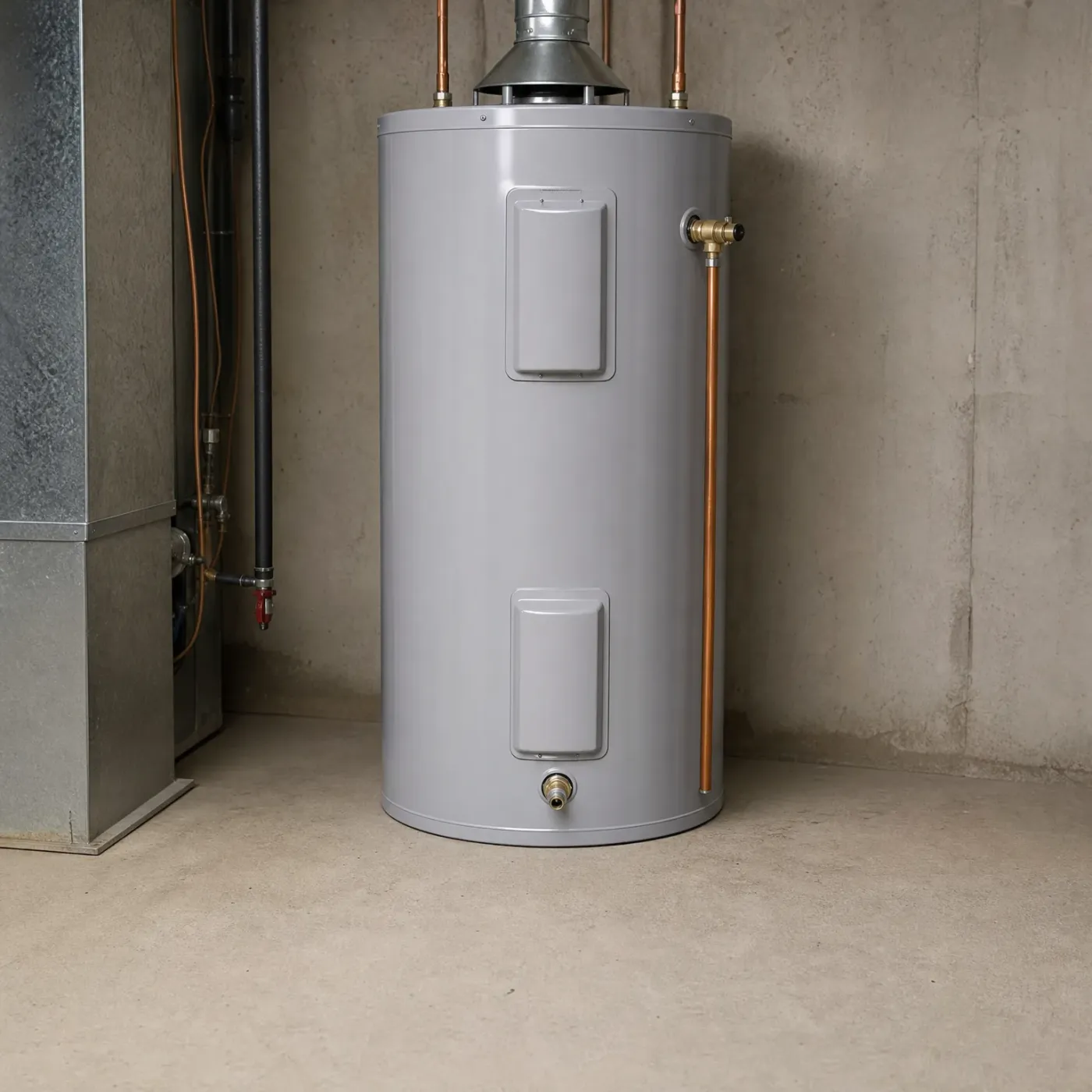
A gray electric water heater like this one has no rust streaking down the tank, no puddle at the base, and dry fittings at the drain valve and the relief pipe. The floor underneath stays dry.
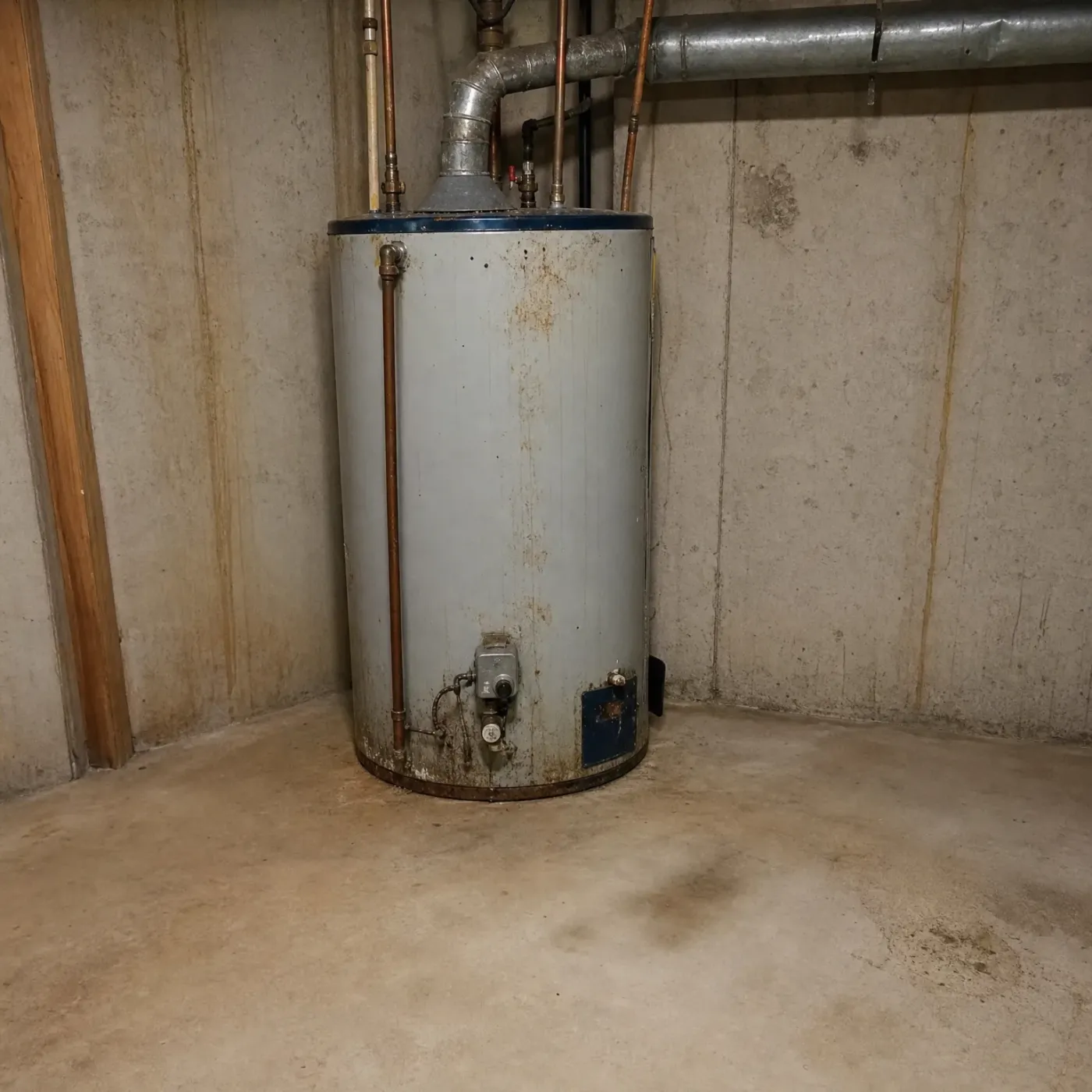
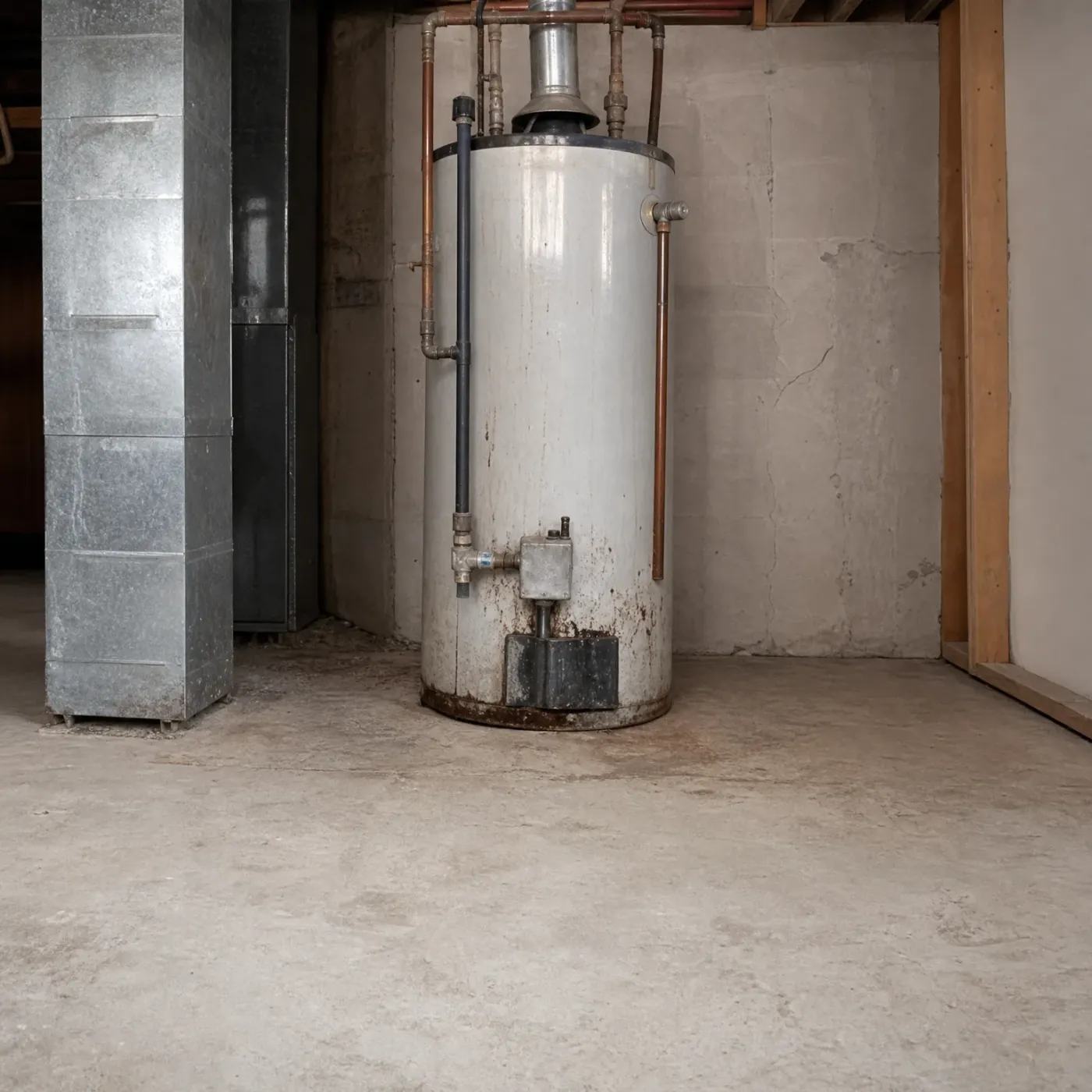
Rust staining down the side of the tank and onto the floor means water has been working its way out for a while, not just today. Once the tank itself is rusted through like this, a repair won't hold, and the tank needs replacing.
Go look at the tank. If the water is coming from a fitting, a valve, or a pipe connection, that's a part that can be swapped out. If it's coming from the tank itself, from a seam or a spot low on the side, the tank is cracked and won't stop. Check the floor around it too. Water sitting there long enough will soften drywall, warp flooring, and get into whatever's stored nearby. If the heater sits in a finished space or near wiring, that standing water is worth taking seriously, not just mopping up and watching to see if it comes back.
Water inside the tank heats and expands against the steel wall
Glass lining cracks and exposes bare metal to water
Rust eats through the tank wall from the inside out
A pinhole or seam opens and water escapes




A leaking tank in an electric water heater doesn't wait for a convenient week. Once rust works through the steel, the leak only gets worse, and with electric rates in Maryland what they are, a tank that's struggling to hold heat while it's losing water is costing you twice over. The humid summers here don't cause the leak, but they make a damp utility closet or basement corner worse once water starts pooling. Figuring out whether you need a new valve or a new tank isn't something to guess at from a puddle. A licensed contractor near you who works on water heaters all year, through Maryland summers and winters alike, has seen this exact failure before and knows what to check first. Getting matched means one contractor looking at your situation, not a handful of companies competing for the job. Send the request and get a straight answer about what's actually failing under that tank.
A glass-lined steel tank has no way to stop rust once the lining cracks. The steel underneath is unprotected, and the leak that follows is a sign the tank is done, not a part waiting to be replaced.
That's why a leaking tank gets swapped out instead of patched. Every electric water heater holds its water under pressure, and a wall thinned by rust has no way to hold that line for long.


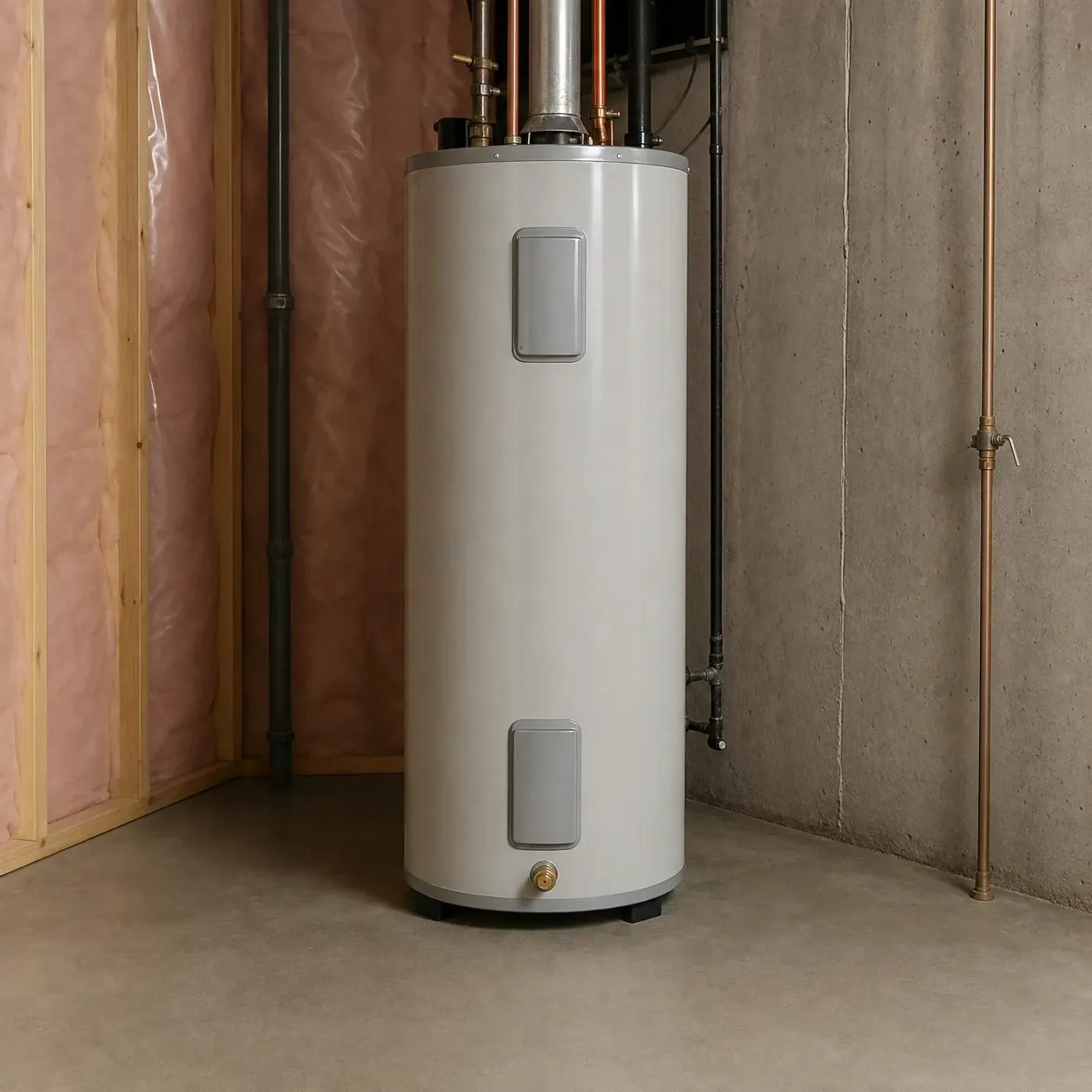
This is what a working setup looks like: tight copper and black iron fittings, insulation doing its job behind the wall panel, and a dry floor underneath. No streaking down the side, no puddle at the base. A tank like this just runs.
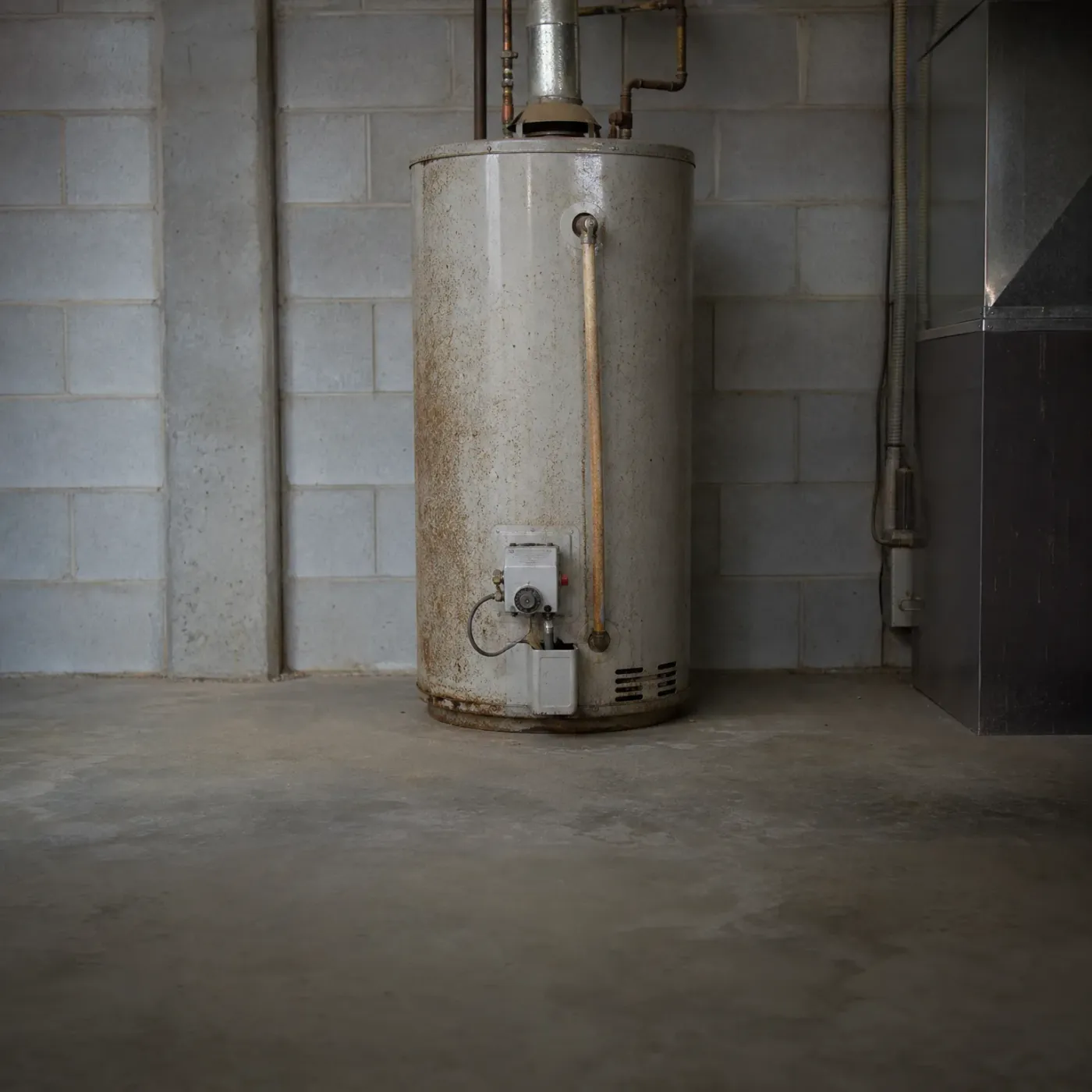
Rust has worked its way down the whole side of this tank, past the fittings and onto the concrete floor. Galvanized pipe like this corrodes too, so a tank this far gone is usually leaking from more than one spot by the time anyone notices.
These are the parts a plumber can replace without touching the tank. A loose connection or worn valve can be swapped out, and the water heater keeps running.
Once the tank itself is leaking, from a seam or a spot low on the side, there's no part to swap. Repair work shifts to replacement.
Most houses in Maryland run on electric water heaters, same as yours probably does. That tank has no gas burner or flue to leak from, so when you find water, it's almost always the tank itself or a fitting near the bottom, not something related to a pilot light.
ACS 2020-2024 5-year B25040
A fitting leak gets fixed. A tank leak gets a new tank. That's the whole question once you've looked underneath and found where the water is actually coming from. What you don't have to figure out on your own is who should do the work. A plumber who services electric water heaters all over Maryland has seen this exact rust pattern and this exact fitting fail more times than you have, and knows within a few minutes which one you're dealing with. You'll be matched with one licensed local contractor for your situation, not a handful of companies competing for the callback, so the person who shows up already knows what they're looking at before they knock. Whether it's a valve worth replacing or a tank that's done holding water, you'll know where you stand, and you won't be the one explaining the problem twice.
The pro who reaches out is licensed in Maryland.