Tell us about the job
Takes about a minute. No obligation.
Electric water heaters fail in patterns that trace back to their elements and thermostats, and in this county that matters because those are the parts doing all the work. Electricity heats more occupied homes in Frederick County, Maryland than any other fuel, at 51.2% (2020-2024 ACS 5-year). A home running on electricity has no burner, no flue, and no combustion air to troubleshoot. When a contractor opens a failed unit here, the upper element, the lower element, and the thermostat controlling each one are where the diagnosis starts. Sediment buildup accelerates element wear, and in a house that has never had the tank flushed, a contractor will often find the lower element already burned through.
Water heaters in this county's older homes often carry years of sediment load that shifts a straightforward repair into something more involved once the tank is drained and opened. Half the homes in Frederick County, Maryland were built in 1991 or earlier (2020-2024 ACS 5-year). A contractor who pulls the access panel on a unit in a house from that period is reading a component that has been working against the same hard water and temperature cycling since it was first installed. Sediment at the base of the tank changes the heat transfer and can mask whether the element or the thermostat is actually at fault, which means the part ordered after a surface diagnosis is sometimes not the part the job needed.
The Parts of a Water Heater a Contractor Checks First
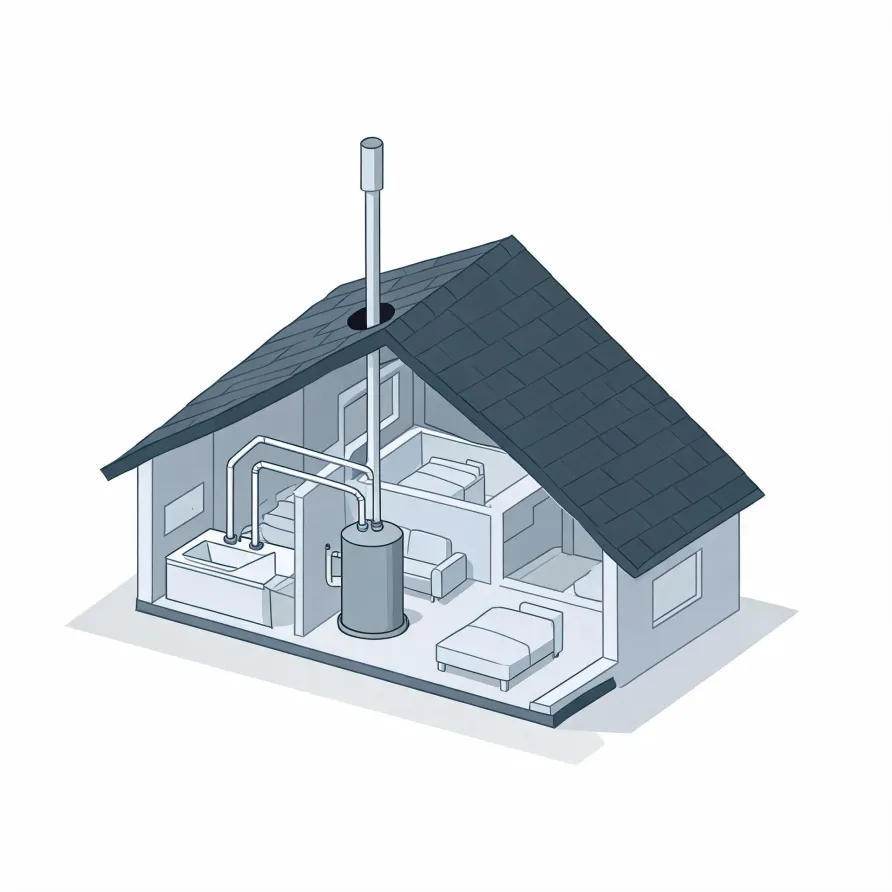
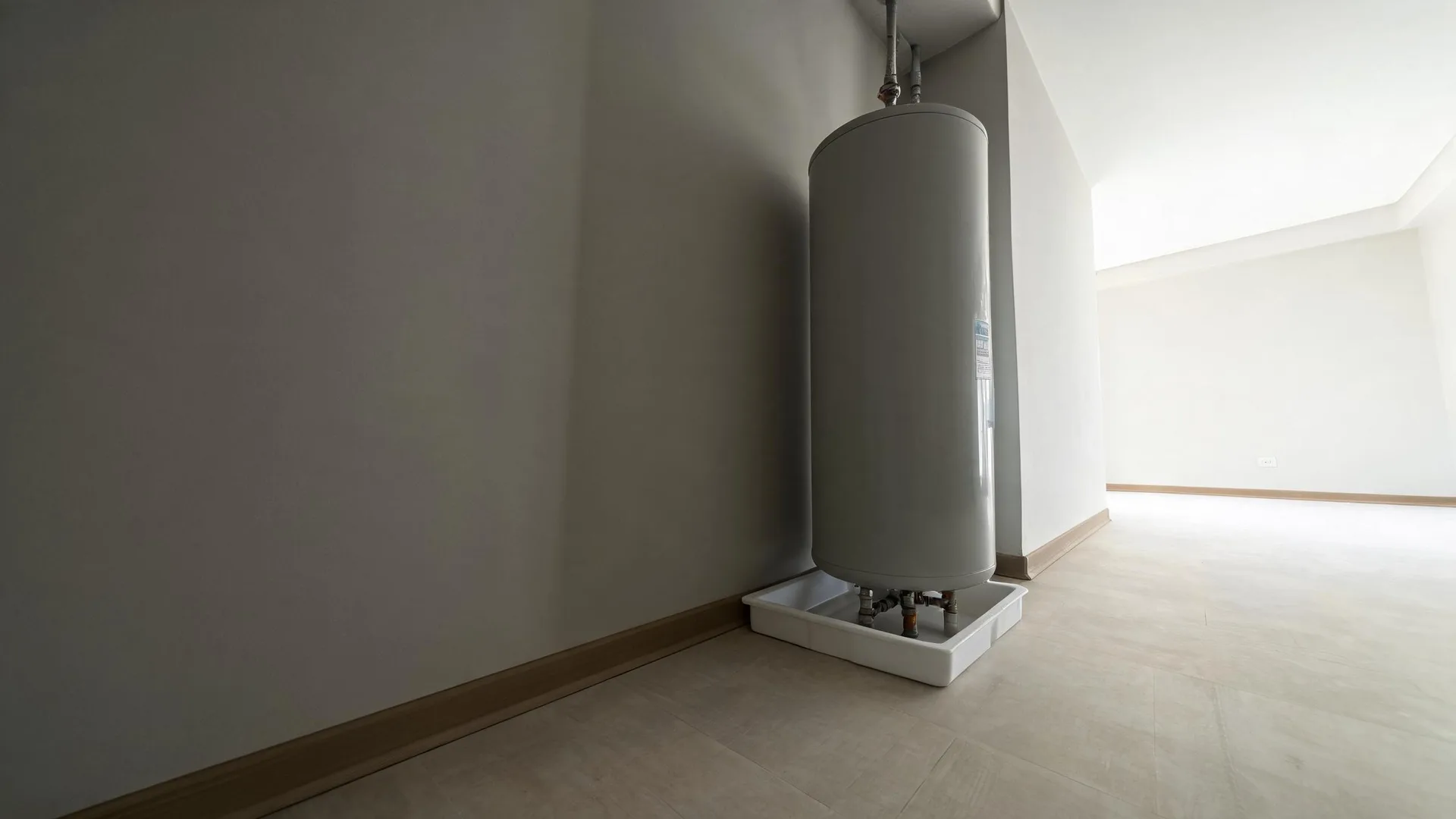
The tank is what most homeowners see: a tall cylinder that sits in a utility room, basement, or closet and holds a reserve of heated water ready for use. Inside it, one or two heating elements or a gas burner assembly does the actual heating, and when a water heater stops producing hot water or produces too little, these are the first places a contractor looks.
The thermostat controls the target temperature and sits against the tank wall behind an access panel. The pressure relief valve mounts near the top of the tank and opens if pressure inside climbs too high. Inlet and outlet pipes connect the tank to the rest of the house supply, and the anode rod runs down into the tank to slow corrosion from the inside.
The drawing shows a typical water heater layout, and a licensed contractor determines which parts apply and what condition they are in for your specific unit.
Get matched in Frederick CountyFrederick County, by the numbers
325 severe weather events were recorded in Frederick County, Maryland between 2015 and 2024.
NOAA National Centers for Environmental Information, Storm Events Database, bulk CSV export, events 2015-01-01 through 2024-12-31.Half the homes in Frederick County, Maryland were built in 1991 or earlier (2020-2024 ACS 5-year).
U.S. Census Bureau, 2020-2024 American Community Survey 5-Year EstimatesFrederick County, Maryland holds 108,924 housing units (2020-2024 ACS 5-year).
U.S. Census Bureau, 2020-2024 American Community Survey 5-Year EstimatesOwners occupy 77.0% of the occupied homes in Frederick County, Maryland (2020-2024 ACS 5-year).
U.S. Census Bureau, 2020-2024 American Community Survey 5-Year EstimatesCodes & Standards Governing Water Heater Repair in Frederick County, Maryland1 sourced rules and standards
Licensing and Legal Requirements in Frederick County, Maryland
Maryland requires a state licence before an individual provides, or assists in providing, heating, ventilation, air-conditioning or refrigeration services.
Severe Weather Events in Frederick County
Extreme weather puts real strain on water heaters, forcing the equipment to work harder and recover from conditions it was not sized for in a calm forecast. How much of that stress lands on a home here is a local question, and the record below shows what Frederick County has logged.
325 severe weather events, 2015–2024. Source: NOAA National Centers for Environmental Information, Storm Events Database.