

Signs your water heater needs replacing in Maryland
Describe your water heater job, and a local pro who handles it gets in touch.
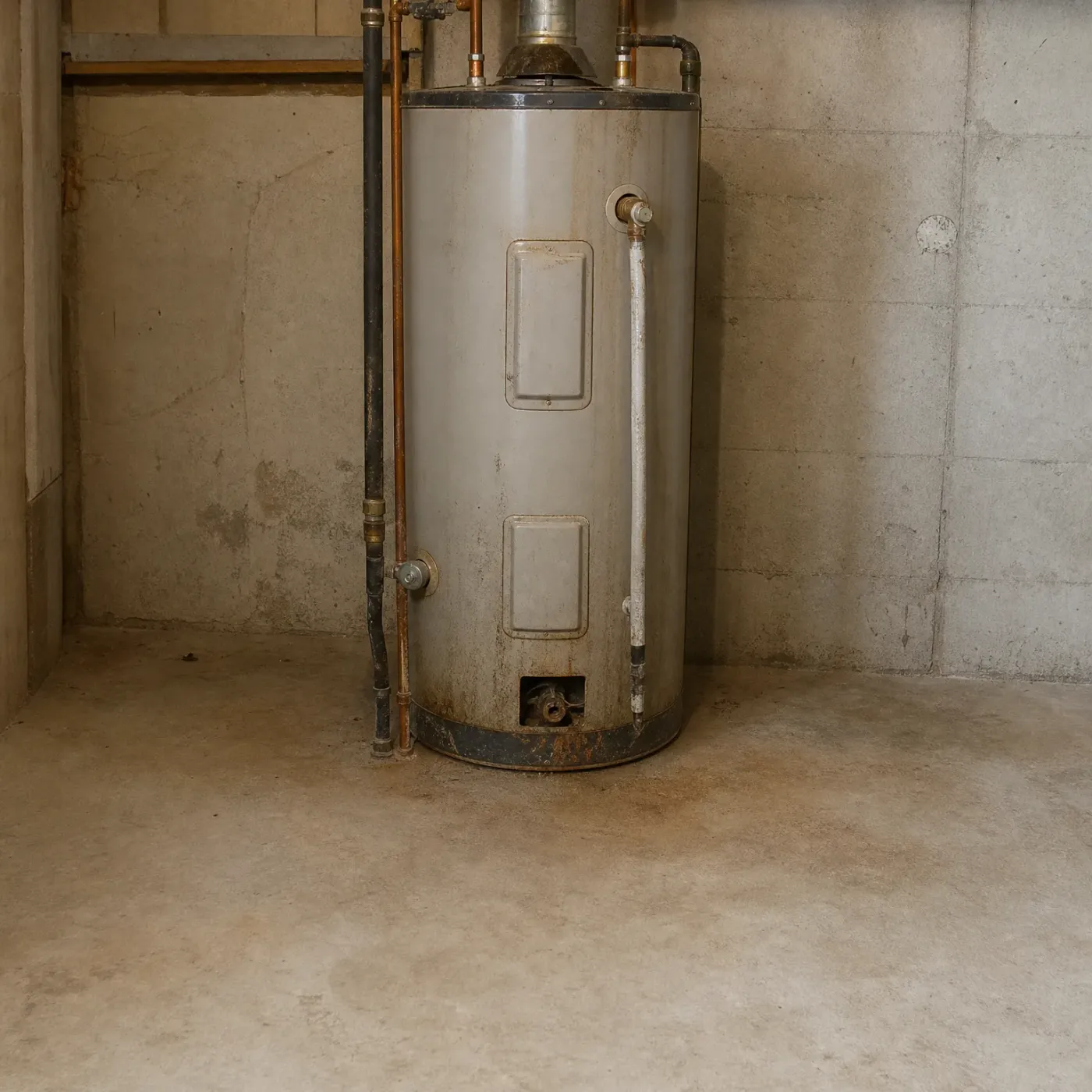
Get matchedRust-colored water, a tank that's noisy, or water that won't get hot anymore all point to the same thing: the tank is failing. Most water heaters last about 8 to 12 years, and once they pass that age, the inside of the tank starts to corrode, which is what turns the water brown or sends sediment through your pipes. A leak at the base means the tank itself has cracked, and that doesn't get fixed, only replaced. If your water heater is electric, which most homes in Maryland have, check how fast it recovers after a shower. A unit that used to keep up and now runs out partway through is losing capacity, not just acting up. Waiting usually means a tank that fails outright, often with water on the floor to go with it. Catching it before that point means you get to choose the timing instead of the heater choosing it for you.


What is your water heater trying to tell you
Check the water first. If it runs rusty or has a metallic smell when only the hot side is on, the tank itself is rusting from the inside. Listen next. A rumbling or popping sound means sediment has built up on the bottom and is hardening under the heat. Look at the floor and the fittings for any dampness, since a tank that's starting to crack will weep before it fails outright. And pay attention to how long the hot water actually lasts. If it runs out faster than it used to, the tank isn't holding heat the way it should. Left alone, a cracked or rusted tank can let go all at once, and with electric rates in Maryland what they are, a dying unit is also costing you more to run every month before it quits.
How do I know if my water heater is about to fail completely?
How do I know if my water heater is about to fail completely?
The tank fails from the inside, so the warning comes before the leak
Inside the tank is a steel shell lined with glass, and welded to it is a rod made of magnesium or aluminum that corrodes in place of the steel. Once that rod is used up, the steel starts rusting on its own, and there's no way to patch it from inside a sealed tank. That's why a tank showing rust in the water or rust around the fittings is close to the end, not partway through it. The failure itself is usually a seam or a weld giving way at the bottom of the tank, which empties fast. If yours is pushing past 10 years, that's the point to plan for replacement before it picks the moment for you.


44.1% of homes statewide heat with electricity
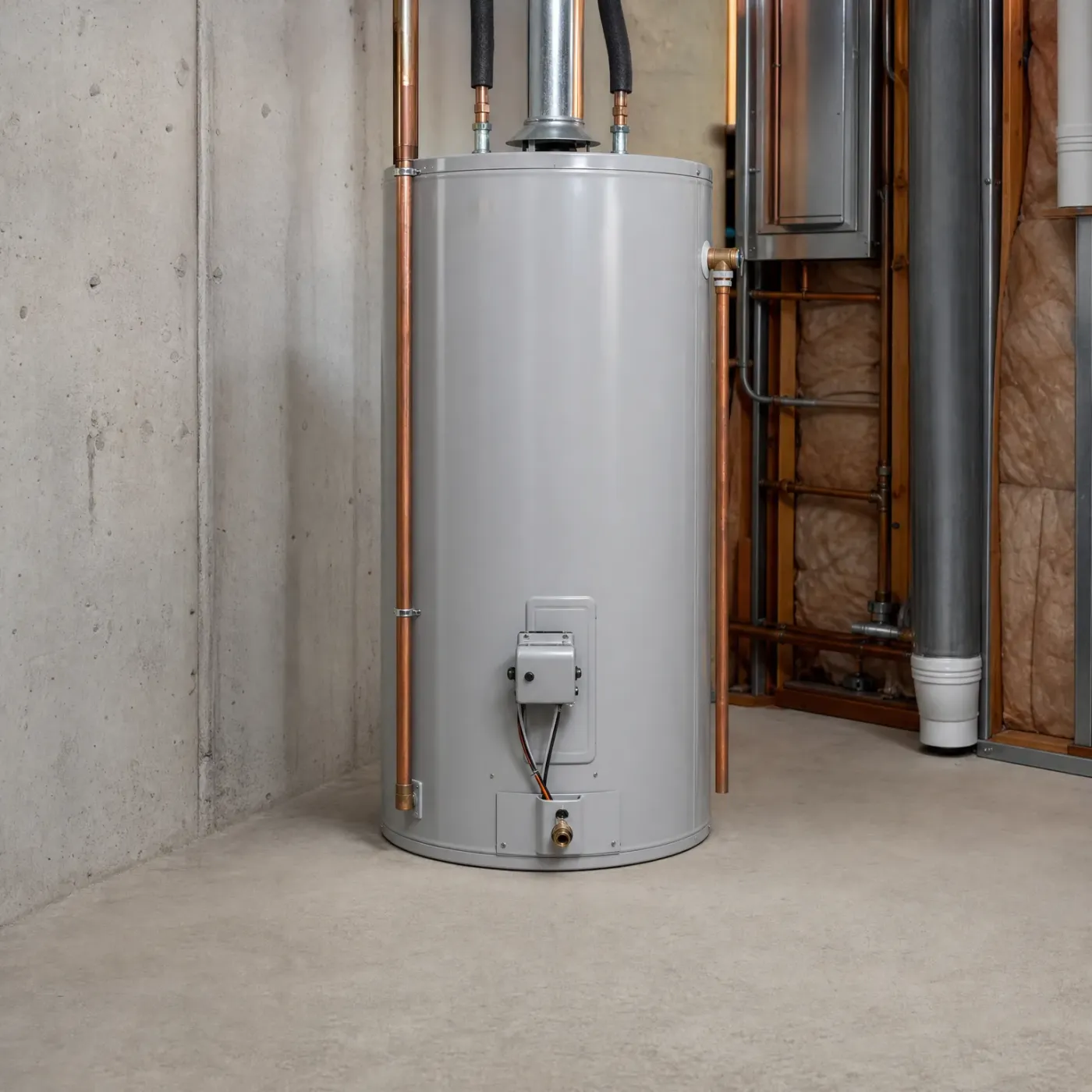
If your water heater runs on electricity, like most homes here, it's working alone. There's no gas line backup, no pilot light option, just the heating elements inside that tank. When those elements or the tank itself start to go, electric is usually all or nothing.
ACS 2020-2024 5-year B25040




A local pro for your water heater installation
Once you send the form, finding a pro is off your list.
A local installer who puts in water heaters gets your project.
Sending the form costs nothing.
Repair the Part or Replace the Tank
Repair
- Makes sense if the tank itself is sound and the problem is one part, like a heating element or a thermostat.
- Costs less upfront, and if the unit is still under 8 years old, it's often the right call.
- A licensed plumber can replace a failed element in an electric water heater without draining or disturbing the tank lining.
- Only worth it if the tank isn't the source of the trouble. A rusted tank can't be patched, only replaced.
- Buys time if you're not ready to replace, but doesn't stop the corrosion already working inside an older tank.
- Won't lower your electric bill if the real issue is that the unit's efficiency has dropped with age.
Replace
- The only option once the tank is rusting or leaking. No part swap fixes a corroded tank.
- A new water heater runs more efficiently, which matters here where electric rates make every kilowatt-hour count.
- Makes sense once a unit passes 8 to 12 years old, since that's when the inside of the tank typically starts to fail.
- Removes the risk of a sudden leak, which with an electric tank usually means a flooded utility closet, not a slow drip.
- Gives you a unit sized and installed for how your household uses hot water, not whatever was standard when the old one went in.
- Worth doing ahead of a failure rather than after one, especially before the humidity of a Maryland summer makes a flooded closet worse.
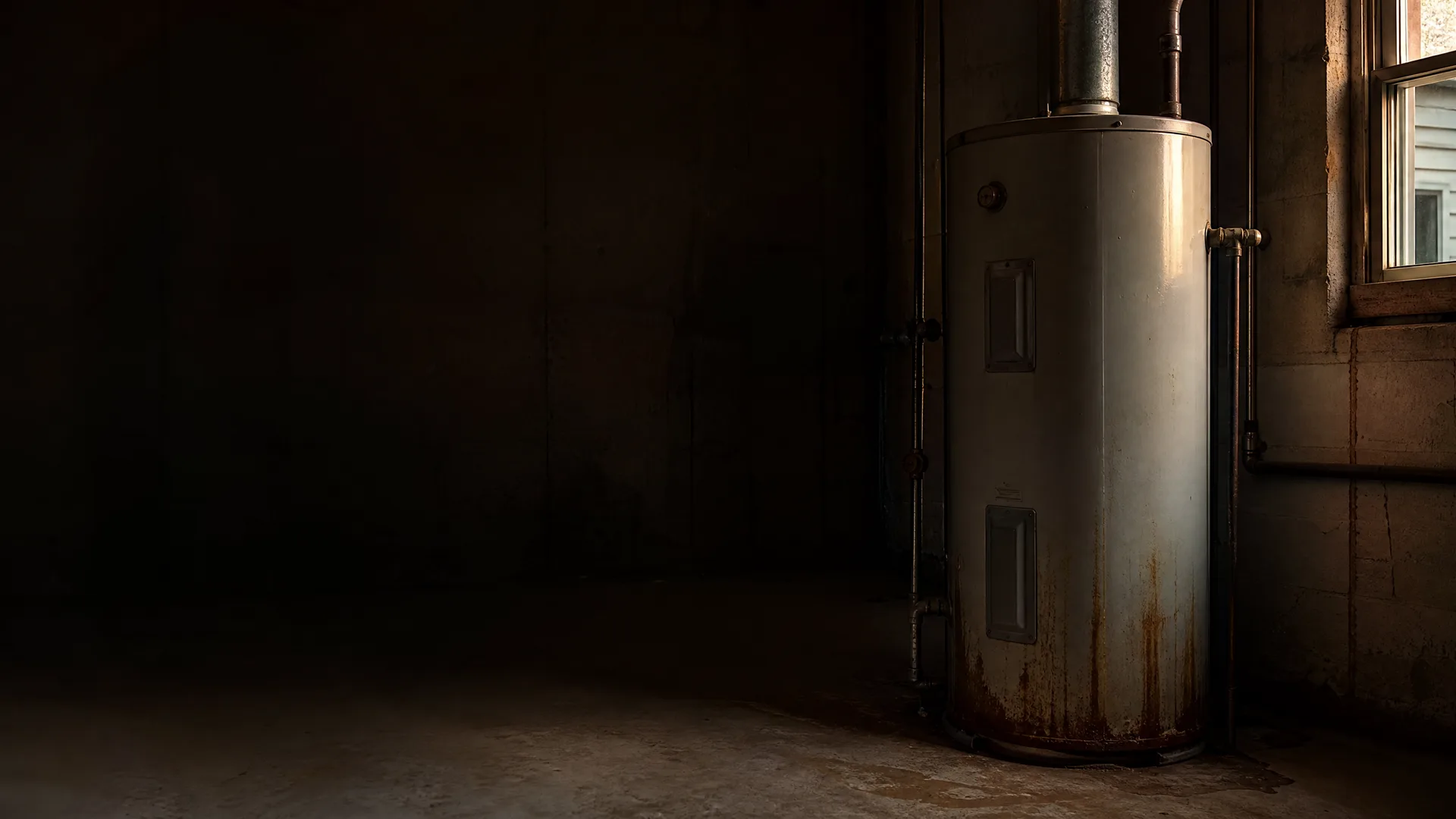
You go down to the utility room after dinner to grab something from the chest freezer, and the air feels warmer than it should, damp around the water heater in the corner. It's early evening, still humid from the day outside. You crouch down and see it: a thin rust-colored streak running down the side of the tank, pooling faint and dark on the concrete at its base. You press a finger to the metal near the bottom and it's wet. The tank hums the way it always has. Nothing's dripping right now. You stand there a moment longer than you meant to, looking at the streak, before you go back upstairs.

You know more about your water heater than you did an hour ago
Rust in the water, a tank that rumbles, water that won't get hot. Any one of those means the tank is on its way out, not something to patch and watch for another year. In Maryland, with electric rates what they are, a dying water heater doesn't just leak eventually. It costs you every month it keeps struggling to heat water it can't hold onto.
You don't have to figure out the rest on your own. Once you send the word that you're ready, the work of finding someone stops being your problem. A contractor who installs water heaters in your area gets your information and reaches out to you directly, matched to what you've described. From there it's a conversation, not a search.


Water Heater Installation
Get the right pro for your water heater

- A local pro who knows water heaters gets your details and gets in touch.
- Get in touch with a local installer about a new water heater.

- Send the form and the search for an installer is over.
- Send the request and finding a pro stops being your problem.

- Answer a few questions instead of calling shop after shop.
- Describe your water heater job once, to one pro.

- Your request goes to one pro, not a list of companies.
- One installer gets your project, so there's no bidding war over it.