Profile view of a bearded man wearing a black baseball cap and a dark gray T-shirt against a plain light background.

How long a water heater lasts in Maryland

Step 1 of 3: Equipment

How long does a water heater last in Maryland?

Water heaters don't come with a clear expiration date, so it's hard to know if yours is on borrowed time or still has years left. With Maryland summers getting sticky and most homes here running on electric power, which isn't cheap, you want to know what to expect before it fails on you, especially with hot water being something everyone at home counts on every day.

About 8 to 12 years, less if it runs on electricity here

A tank water heater typically lasts 8 to 12 years. Electric models tend to fall toward the shorter end of that range, and most homes in Maryland heat water with electricity. The heating element works harder to keep up with demand, and that wear adds up faster than in a gas unit. Humid summers don't change the tank's lifespan directly, but they do mean the unit sits in a damp mechanical space or basement for more of the year, which can speed up corrosion on the tank itself. Once a water heater passes 10 years, a leak or a failed element is worth taking seriously rather than waiting out.

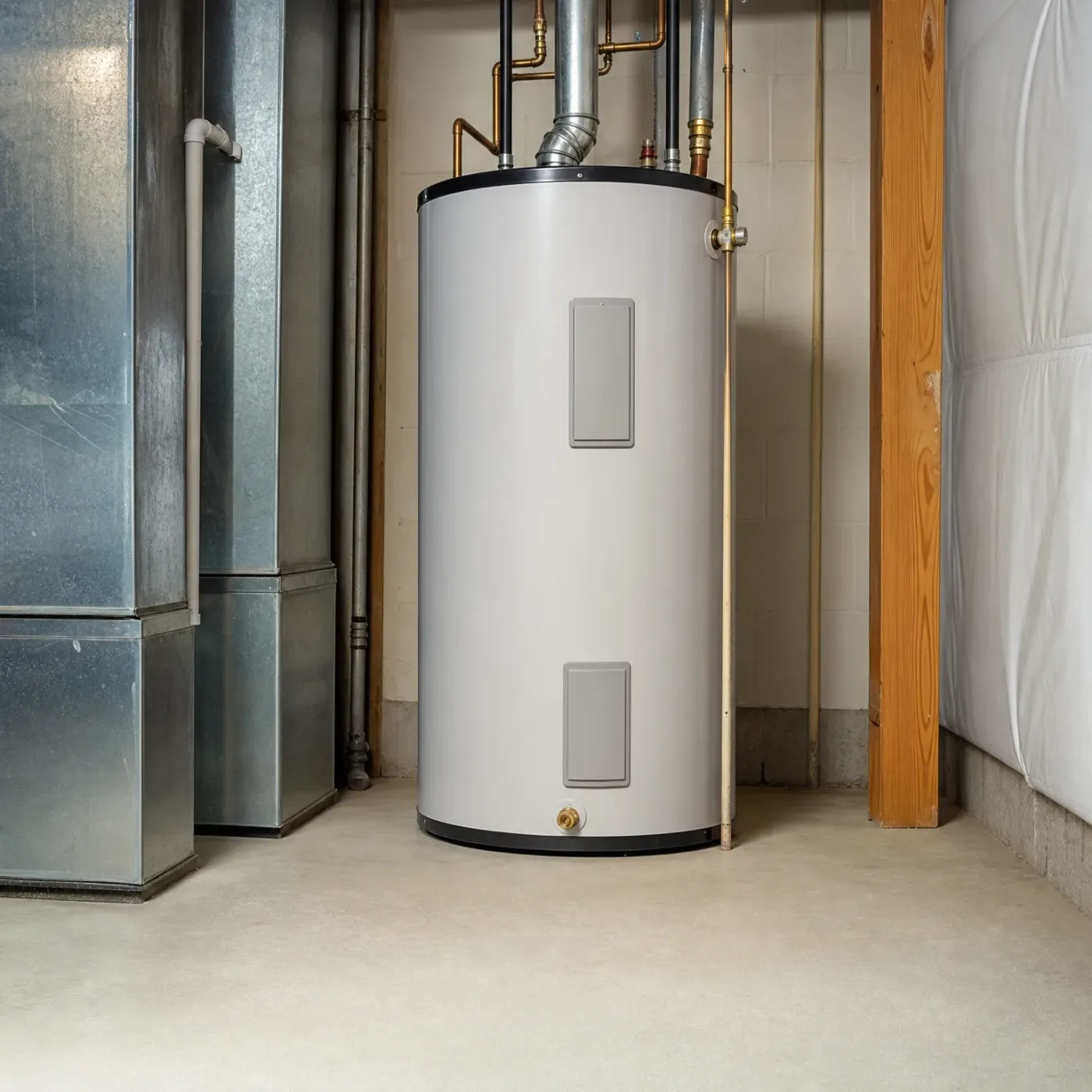
A white cylindrical water heater with two access panels stands on a concrete floor in a basement corner, beside galvanized ductwork, copper and metal pipes, a wooden post, and a concrete block wall.

Still Running Fine

Hot water comes up fast, the tank stays quiet, and there's no rust around the fittings or the drain valve. If yours looks like this, with clean connections at the top and no moisture pooling at the base, it's doing its job and doesn't need a second look yet.

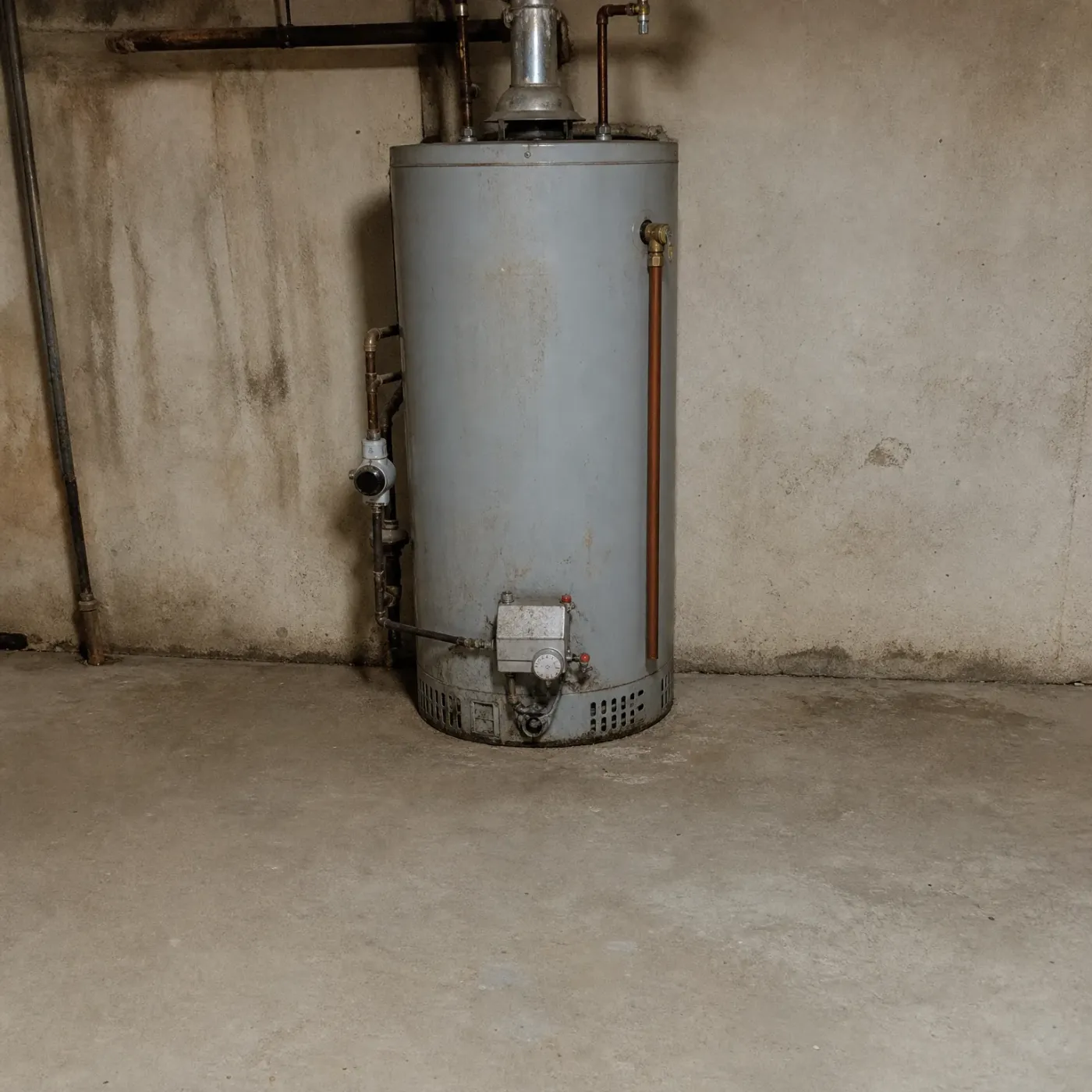
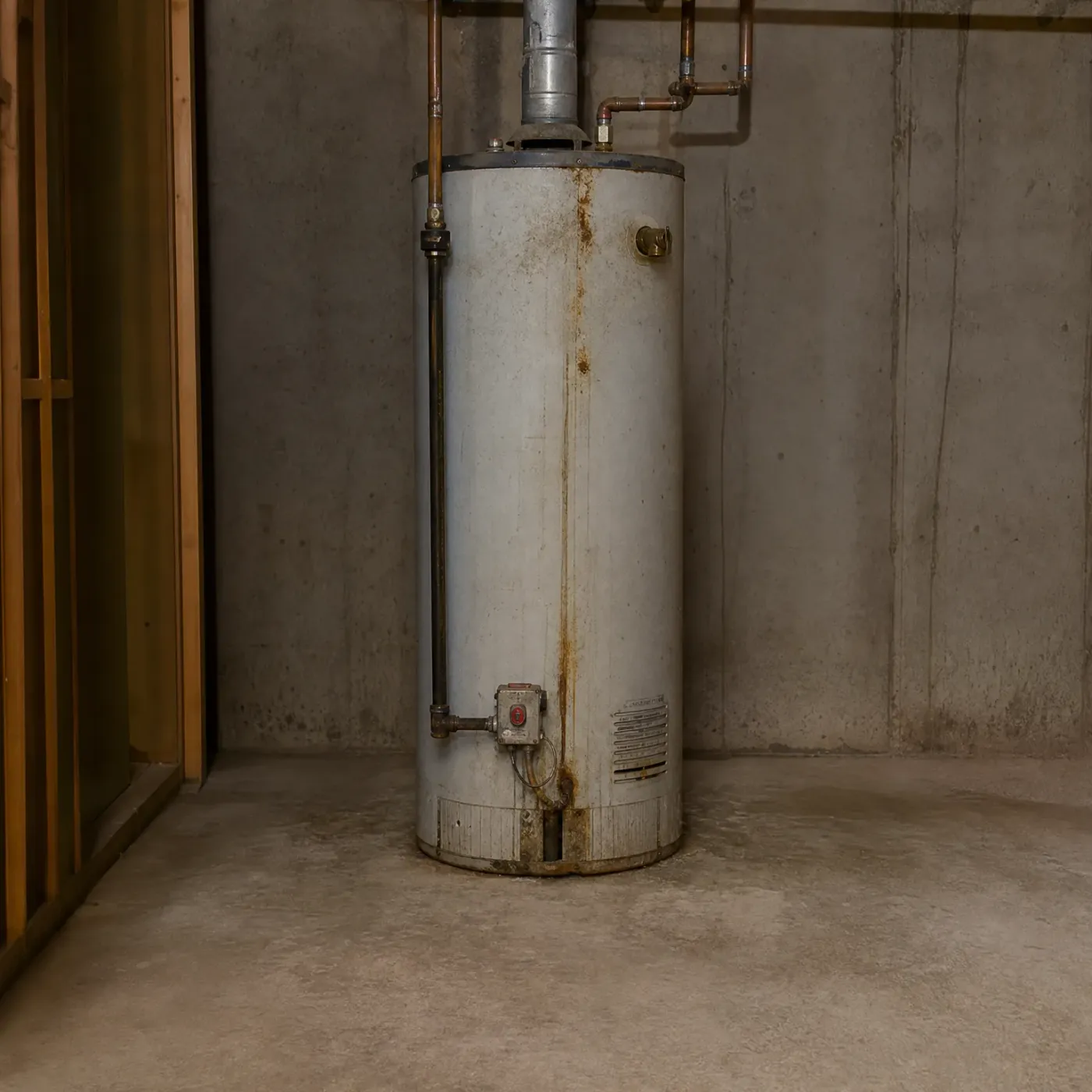
An older gray cylindrical gas water heater with copper and steel piping and a flue, standing on a concrete floor against a stained concrete wall.

Showing Its Age

Rust along the seams, a flue vent that's corroded, or water collecting near the base are signs the tank is wearing out from the inside. Once a gas control unit or pressure relief valve starts to go, a water heater this old is closer to failing than to lasting another winter.

Is your water heater trying to tell you something?

Walk past it and take a look. Rust-colored water from the hot tap, or water that never quite gets hot like it used to, both point to a tank on its way out. So does a popping or rumbling sound when it runs, which usually means sediment has built up on the bottom of the tank. Check around the base for damp spots or a slow drip near the drain valve. In an electric water heater, a heating element going bad can leave you with lukewarm showers even though the power's on and the breaker's fine. None of this fixes itself. Left alone, a tank that's failing can leak in earnest, and with electric rates what they are in Maryland, a struggling unit is also costing you more to run every month it keeps limping along.

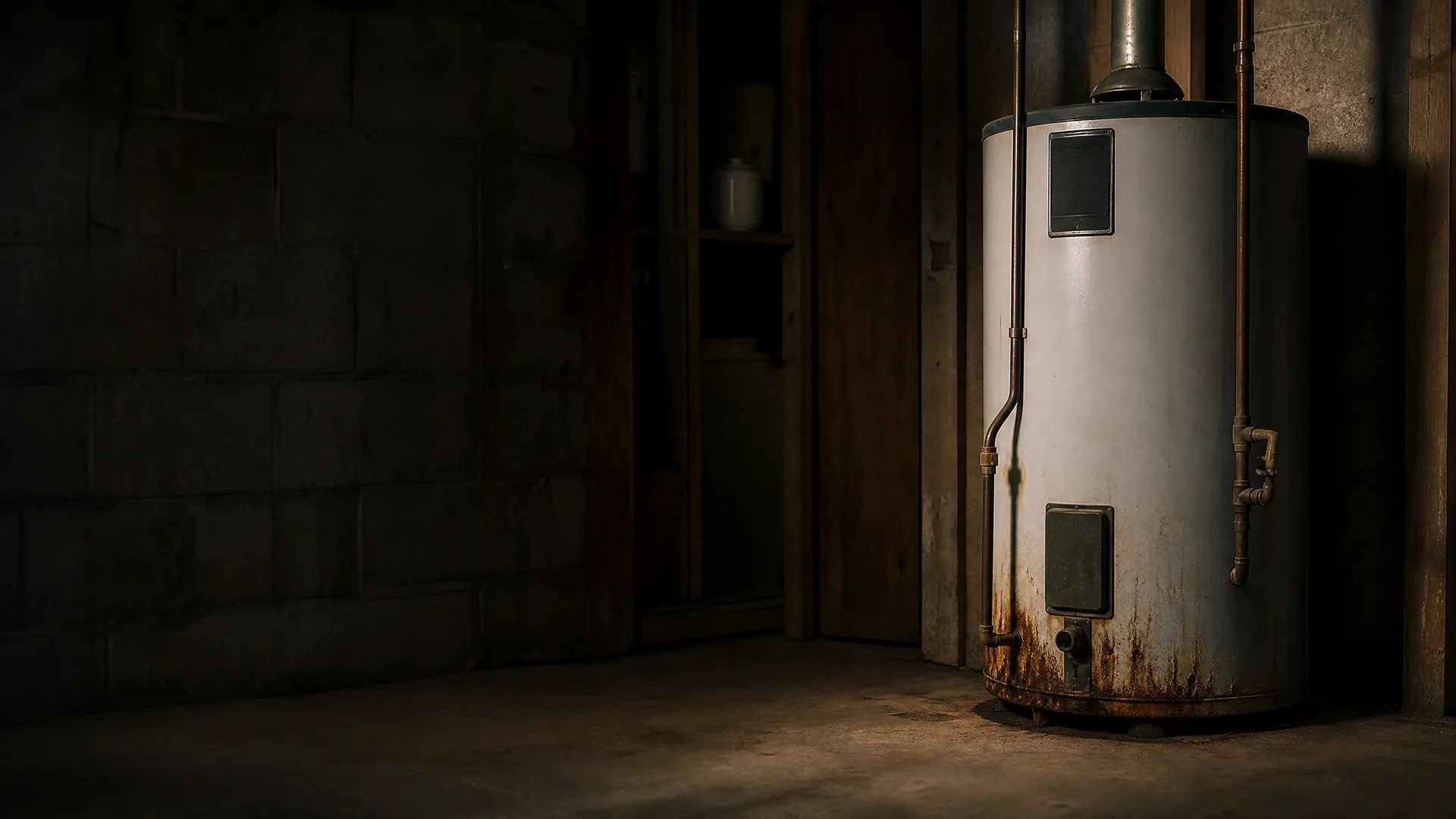
A rusting cylindrical water heater with attached pipes and flue stands in a dim basement corner beside a concrete block wall and a wooden door.

You go down to the utility room after dinner to grab something off the shelf, and the light catches it: a thin rust stain running down from the base of the tank, pooling faintly where it meets the floor. It's evening, quiet, nothing dramatic, just that reddish streak you don't remember being there last time. You crouch down and touch the floor near it. Slightly damp. The tank hums along like it always has, no sound at all really, but that rust tells you something is giving out at the seams, slow and steady, the kind of thing that doesn't fix itself and doesn't wait for a convenient week.

Skip calling around

One installer gets your project, so there's no bidding war over it.

You're not committing to anything by asking.

Electric tanks run longer

An electric water heater has no burner or flue, which are the parts that take the worst beating in a gas unit. With most Maryland homes running electric, that works in your favor. The heating elements and thermostat are simple and don't corrode as fast as the burner assembly in a gas tank. That usually buys an electric tank a few extra years over a gas one of the same size, as long as the anode rod inside was doing its job the whole time.

Hard water speeds up wear

Maryland's water isn't the softest, and the minerals in it settle to the bottom of the tank over time. That layer of sediment sits between the heating element and the water, so the element works harder to do the same job. Over the years that extra strain adds up, and it's part of why two tanks installed the same year can fail at different times. Draining a few gallons from the tank now and then slows the buildup, but it doesn't stop it.

A woman with long light-brown hair in a gray knit sweater sits in a living room looking off to the side, with a sectional sofa, houseplant, lamp, wooden table and large windows behind her.
A woman in a chunky gray turtleneck sweater sits indoors looking off to the side, with a blurred dining table, chairs, pendant lamp and window behind her.
A woman in a cream knit sweater with her hair in a bun stands near a window, looking off to the side, with a gray sofa, houseplant and open kitchen with pendant lights blurred behind her.
A woman with long brown hair in a cream knit sweater stands near a window, looking to the side, with a white sofa, shelving, and a hallway visible behind her.

Replace it now or wait it out

If your water heater is showing just one sign, a little rust at the fitting, a slower recovery, you can often wait and watch rather than replace it on the spot. Keep an eye on the drain valve and the pressure relief valve for the next few months, and check the water temperature at the tap. Waiting costs you nothing extra if the tank holds steady. But if it fails while you're waiting, you're without hot water until a new one goes in, and that's a worse position than planning the swap on your own schedule.

Why timing the replacement matters

A water heater that's near the end tends to fail at the worst time, during a cold snap when every tank in the county is being asked to work harder, or right when you've got a house full of people wanting showers. Finding a contractor at that point means calling around to see who's free, explaining the same symptoms to each one, and comparing quotes under pressure. Lining up a local contractor before it fails means someone who installs these in Maryland homes every week already knows which models hold up against the electric load most houses here run, and you're dealing with one company instead of sorting through several bids.

A woman and a child wrapped together in a knitted gray blanket on a couch, with the child's head resting on her shoulder and a lit table lamp and houseplant in the background.
An older woman with gray hair in a bun and glasses, wearing a beige knit sweater, smiles while looking to the side in a warmly lit kitchen, with a loaf of bread on the counter in the foreground and a snowy scene outside the window.
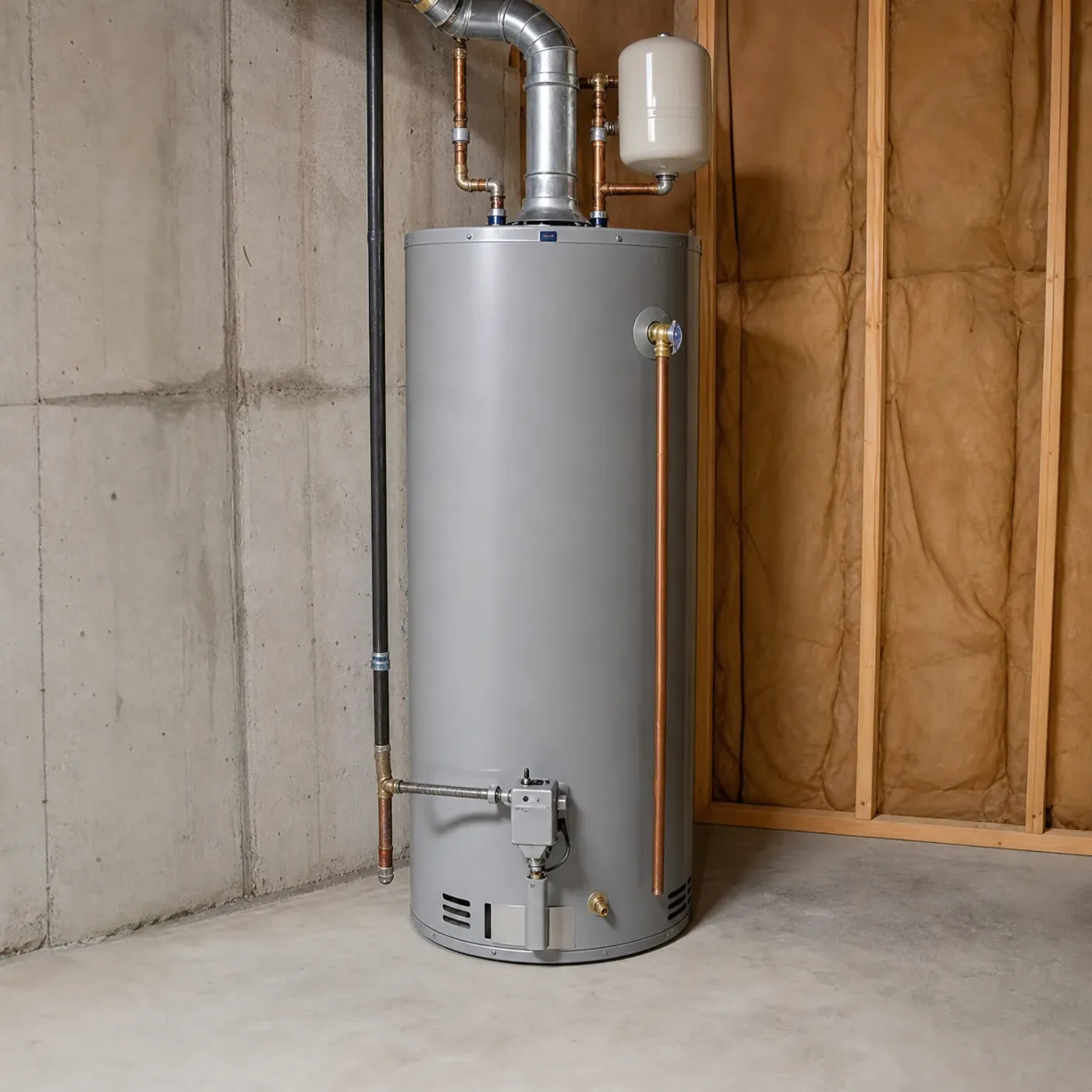
A gray cylindrical gas water heater with copper piping, flue vent, and a small expansion tank stands in a basement corner between a concrete wall and an insulated stud wall.

Working the way it should

A gas water heater like this one should have clean copper and black iron lines, a clear flue vent, and an expansion tank mounted square above it. No scorch marks near the burner, no gas smell, nothing loose at the fittings. A setup like this just needs to be left alone.

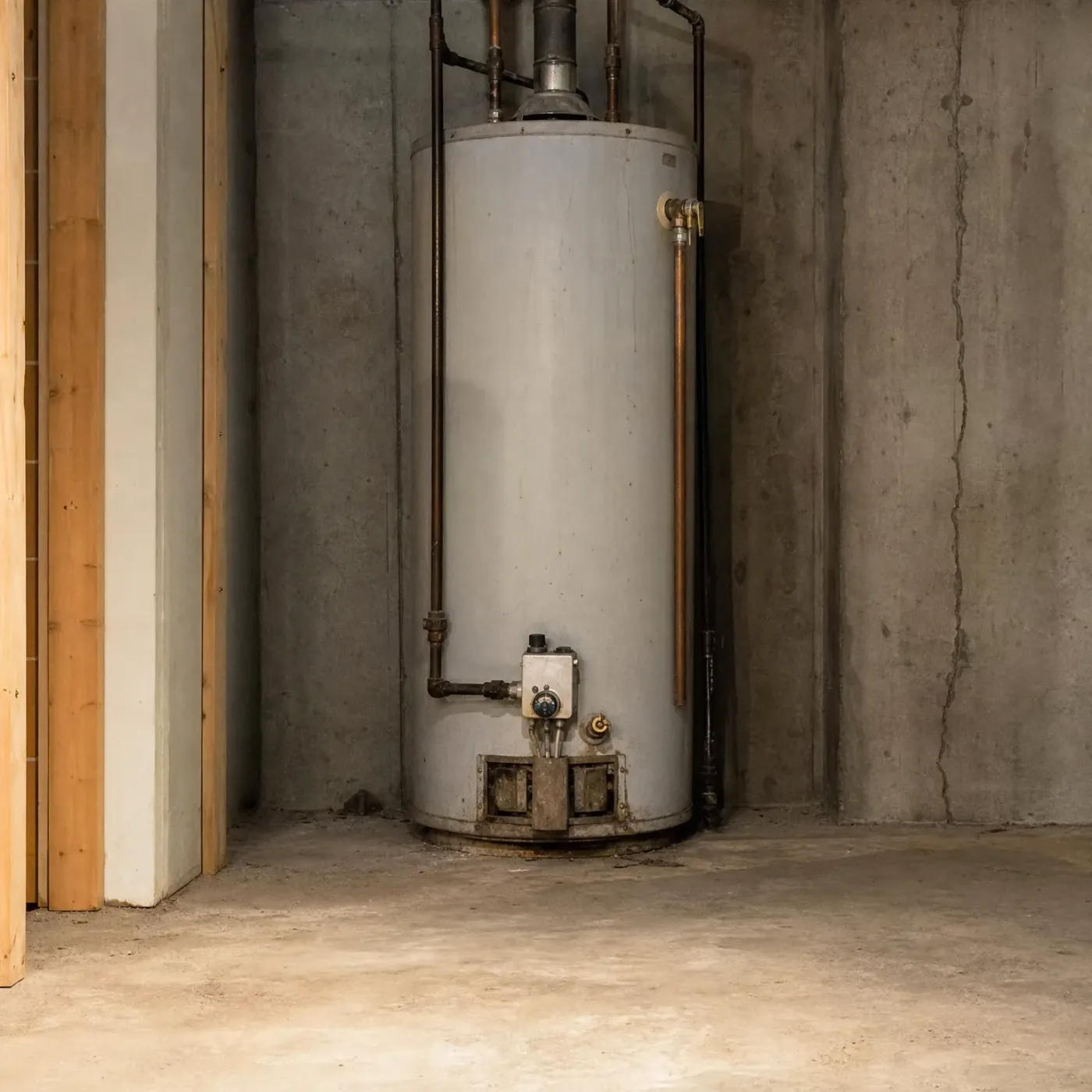
An older gas water heater with copper and black pipes stands in the corner of a bare concrete basement next to a wood-framed partition wall.

Past its working life

This one sits alone in the corner, older, with the gas control valve at the base worth a look. If the dial sticks, the pilot won't hold, or the tank shows rust low down where the valve threads in, it's not a repair worth chasing. Installing a new one stops the guessing.

An aging rust-streaked gas water heater with copper and galvanized pipes stands against a bare concrete basement wall beside wooden stud framing.
Before you get your water heater installation
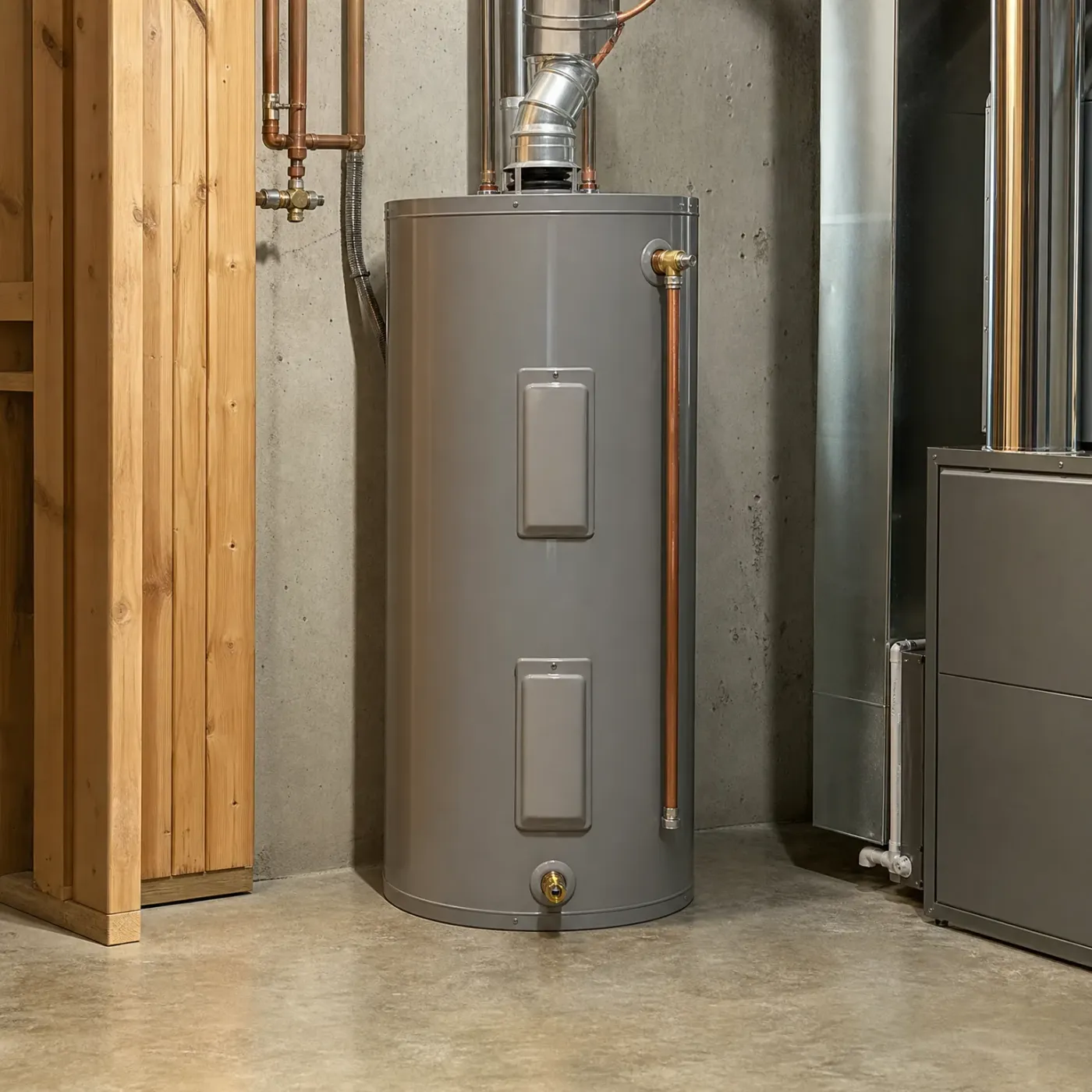
A gray cylindrical water heater with two access panels and copper piping stands against a concrete wall in a basement, beside wood framing and metal ductwork.
After you get your water heater installation

Calling around for quotes means explaining the same rust stains and slow recovery to three or four companies, then waiting to see who calls back first.

One request connects you with a local contractor who installs water heaters in Maryland homes all year and knows which tanks hold up and which don't.

44.1% of homes statewide heat with electricity

Most Maryland homes run electric water heaters already, so yours is likely wired the same way as the furnace and everything else in the house. Electric tanks have no burner or flue to wear out, so the elements and thermostat tend to be what eventually fails, not the tank body itself.

ACS 2020-2024 5-year B25040

A water heater in a Maryland home runs somewhere around ten to fifteen years, electric units often on the longer end since there's no burner or flue to wear down. Past that, you're watching for the signs already covered: rust in the hot water, slow recovery, noise from the tank, moisture at the base. Once you see them, the question isn't whether to replace it, it's when. A local contractor who installs these year-round in homes wired the same way as yours has likely seen the same tank, the same elements, the same failure, more than once this month. You call one number, not four, and the person who shows up already knows what tends to go wrong in a house like yours before they open the panel.

Sunlit corner of a room with a wooden sideboard holding a ceramic vase of olive branches and a dark wooden bowl, beside a white-framed window, a hardwood floor and woven rug.
A wooden cabinet holding a pale ceramic vase with leafy branches stands beside a beige wall in a sunlit room with hardwood floors, a jute rug, and a window showing green foliage outside.
Sunlit room corner with a beige upholstered sofa holding a rust-brown cushion, beside floor-length linen curtains at a window, over a wood floor with a woven rug.
Corner of a room with beige walls, a framed photograph, a floor-length linen curtain beside a window, an upholstered armchair with a knit pillow, white baseboards and trim, wood flooring and a pale rug.
Sunlit living room corner with a beige upholstered armchair with a cushion, linen curtains beside a wooden-framed window, green vertical panelled wall with a framed print, and a wooden table edge over a woven rug.

Describe it once

Only one pro gets your request, so you hear from one company.

Skip calling around

It costs nothing to send, and you don't have to hire anyone.