
Running as it should
The flue vent, the copper lines, the two thermostat panels on front: this is what a healthy electric water heater looks like. No rust on the tank, no corrosion at the fittings. It's doing its job and nothing says otherwise.

Most Maryland homes have electric water heaters, usually because the house already heats with electricity and there's no gas line run to it. That setup works fine, but electric water heaters cost more to run than gas ones, and power here isn't cheap. If your home already has a gas line for the furnace or a stove, running one to the water heater can make the switch worth it over time. If there's no gas line at all, bringing one in adds real cost to the install, and that changes the math. Tank size matters too: a bigger household wants more recovery, and gas units recover faster after a full draw than electric. If your current heater is electric and working, there's no need to switch it just to switch it. The decision comes down to what's already run to your house, not which fuel is better on paper.
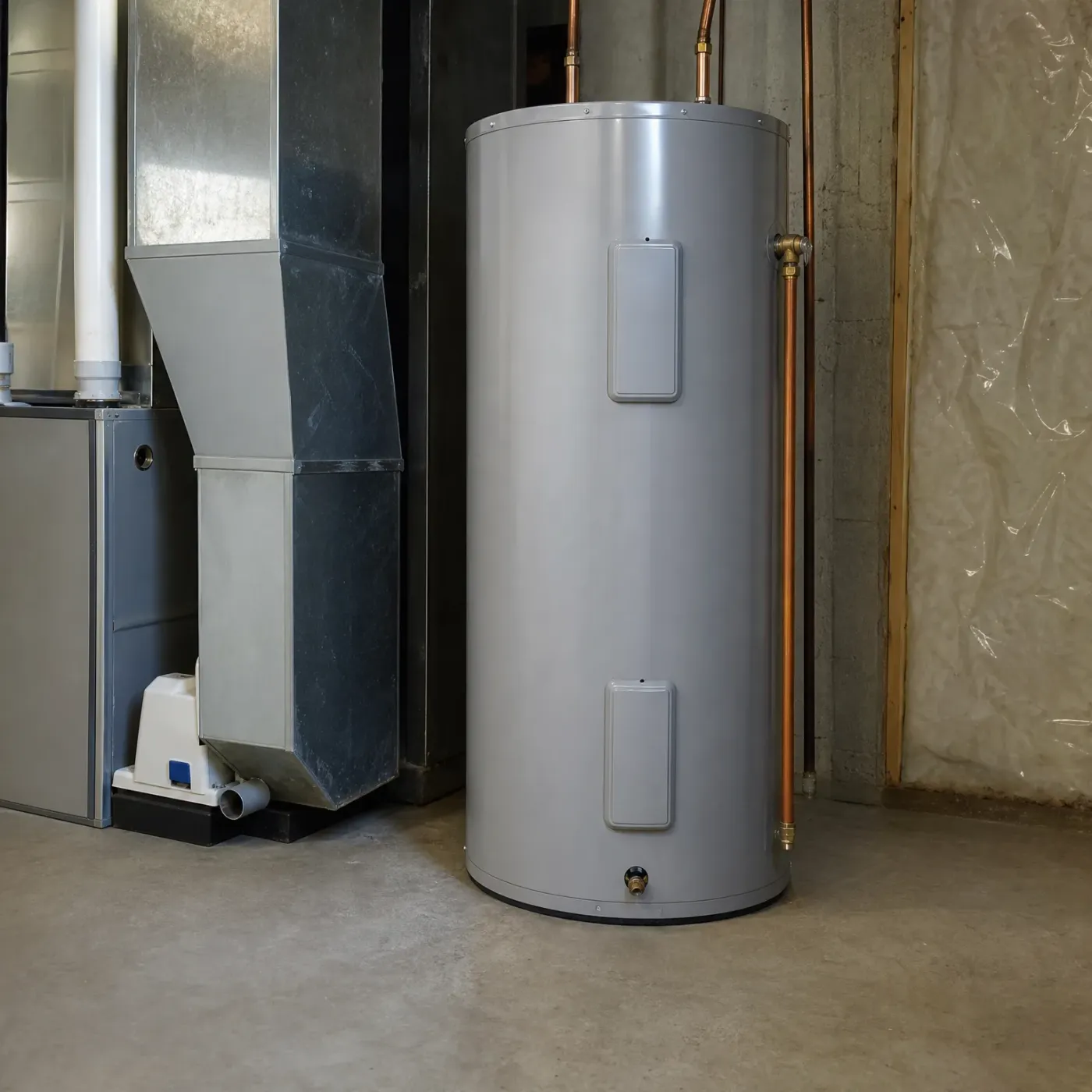
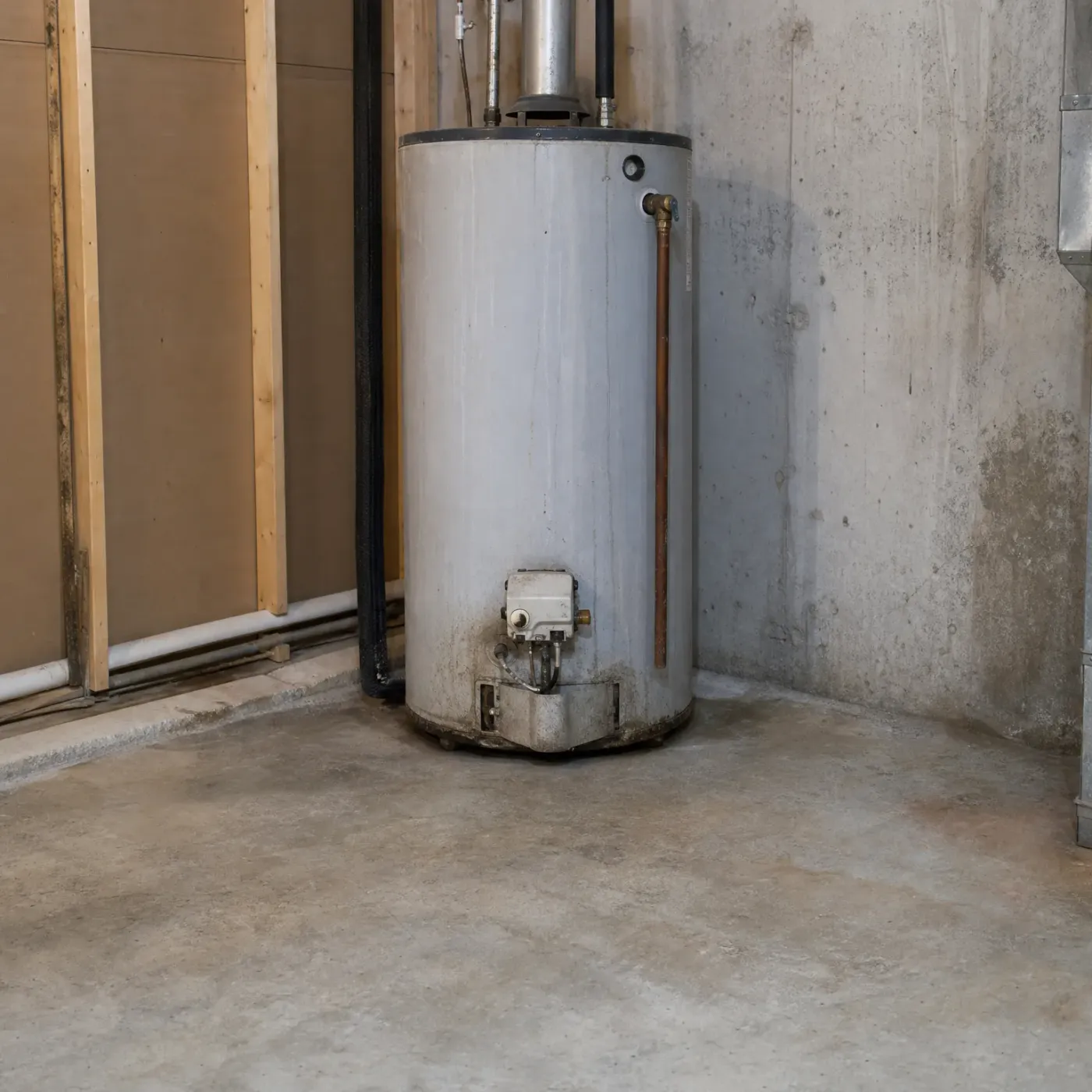
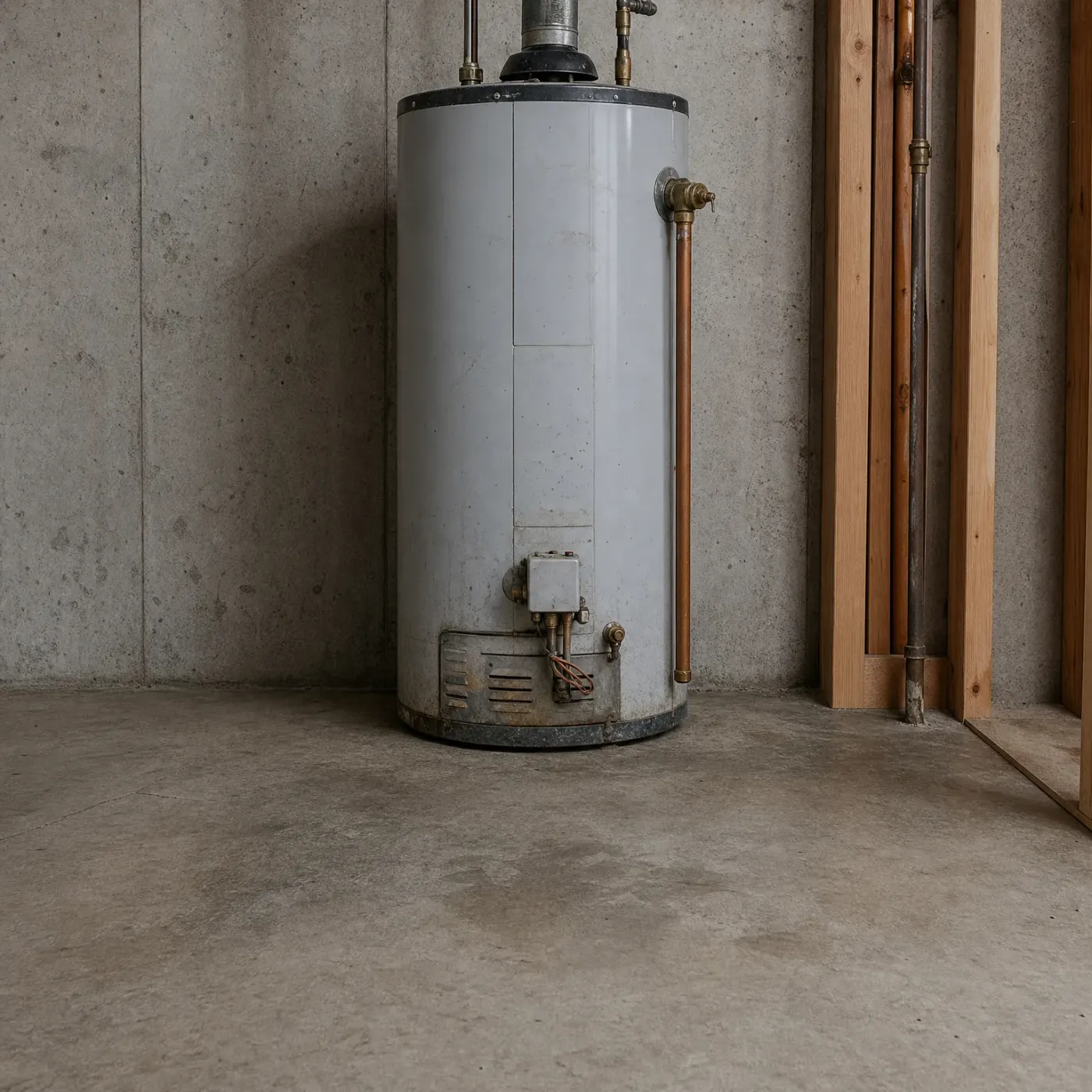
A gas water heater fires a burner under the tank, so it recovers hot water faster once the tank runs low. An electric one heats with elements inside the tank instead, usually two, set one above the other. If the lower element fails, the top one can still keep part of the tank hot, which is why an electric water heater sometimes seems to work fine and sometimes runs cold fast. Gas needs somewhere for the exhaust to go, so it has to vent through a flue, and it pulls in combustion air to keep the burner running. That means where you put a gas unit matters more than it does for electric. Electric just needs power, the same power already running the rest of the house, so there's no flue or gas line to add. That's also why electric is the simpler install in a home that already has one. One more difference worth knowing: a gas water heater keeps making hot water through a power outage, since the burner doesn't need the home's electric service to fire.




One installer gets your project, so there's no bidding war over it.
Sending the form costs nothing.
If your house runs on electric heat, chances are there's no gas line to the meter yet, and that's the first thing to check before you set your mind on a gas water heater. Getting one in means a permit and a new gas line run to the spot where your water heater sits, plus a flue through the roof or an exterior wall to carry exhaust out. That's work beyond just swapping one tank for another. An electric replacement skips all of it. The wiring is already there, so a contractor installs the new unit and connects it, no fuel line to plan around and no venting to add. There's a tradeoff worth weighing beyond the install itself. A gas water heater with a standing pilot keeps making hot water even when the power goes out, which matters if your area loses power during storms. It also recovers faster after a full tub or back-to-back showers, which counts for more in a house with several people using hot water at the same time. But that flue needs attention. Skip the upkeep and exhaust gases can back up into the house instead of venting outside, which isn't a risk an electric water heater carries at all, since it has no flue and nothing to burn. Weigh what your house already has against what you'd be adding before you decide.
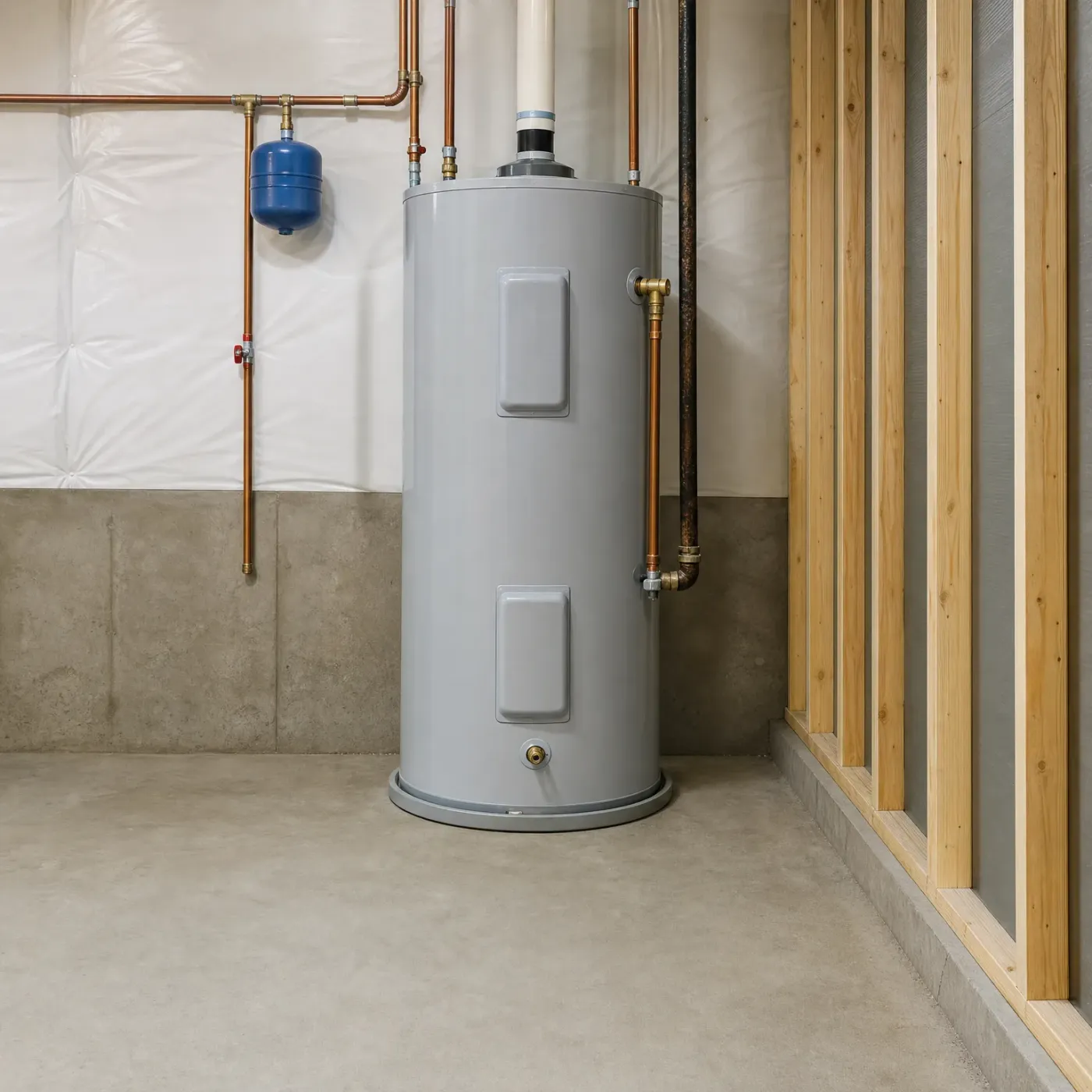
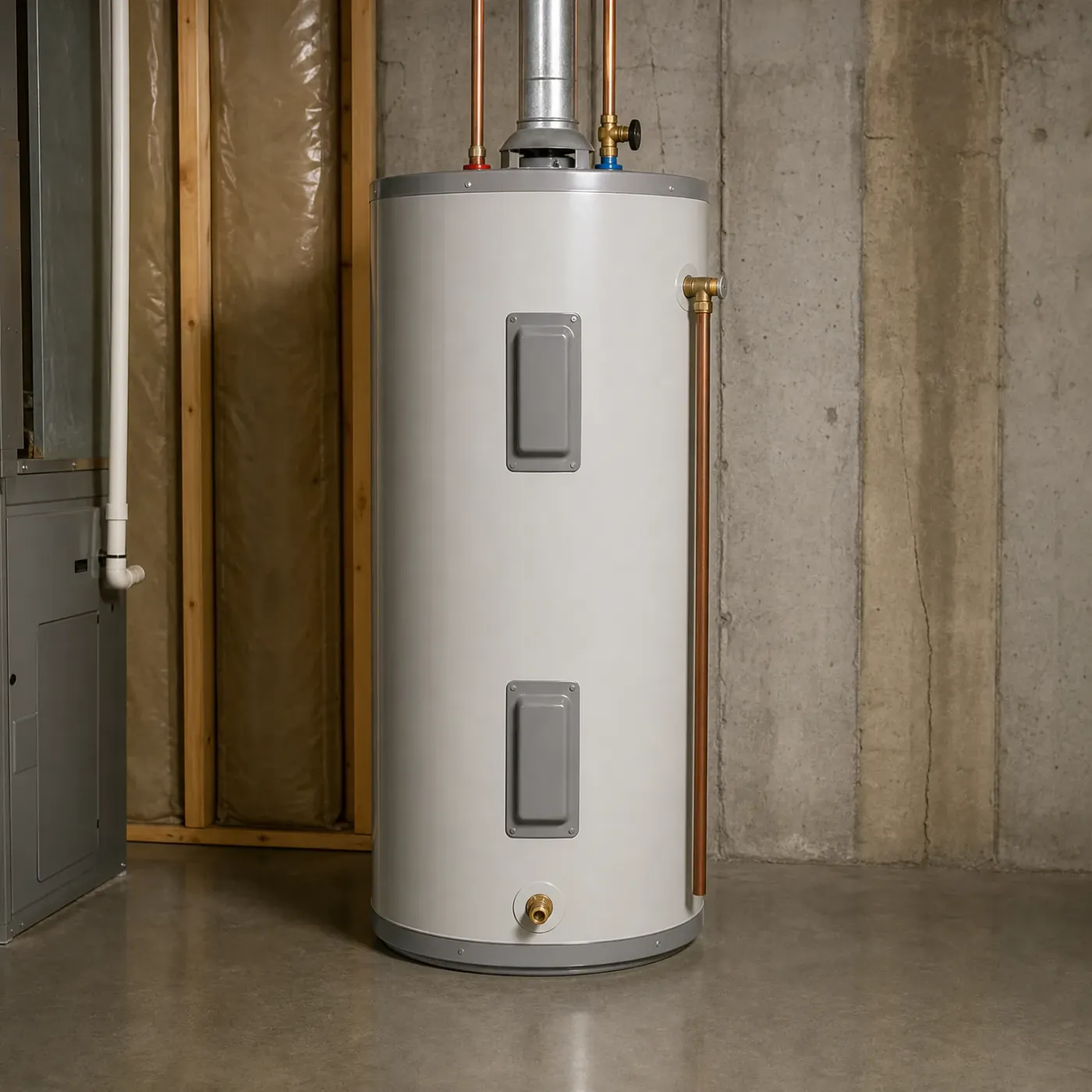
The flue vent, the copper lines, the two thermostat panels on front: this is what a healthy electric water heater looks like. No rust on the tank, no corrosion at the fittings. It's doing its job and nothing says otherwise.
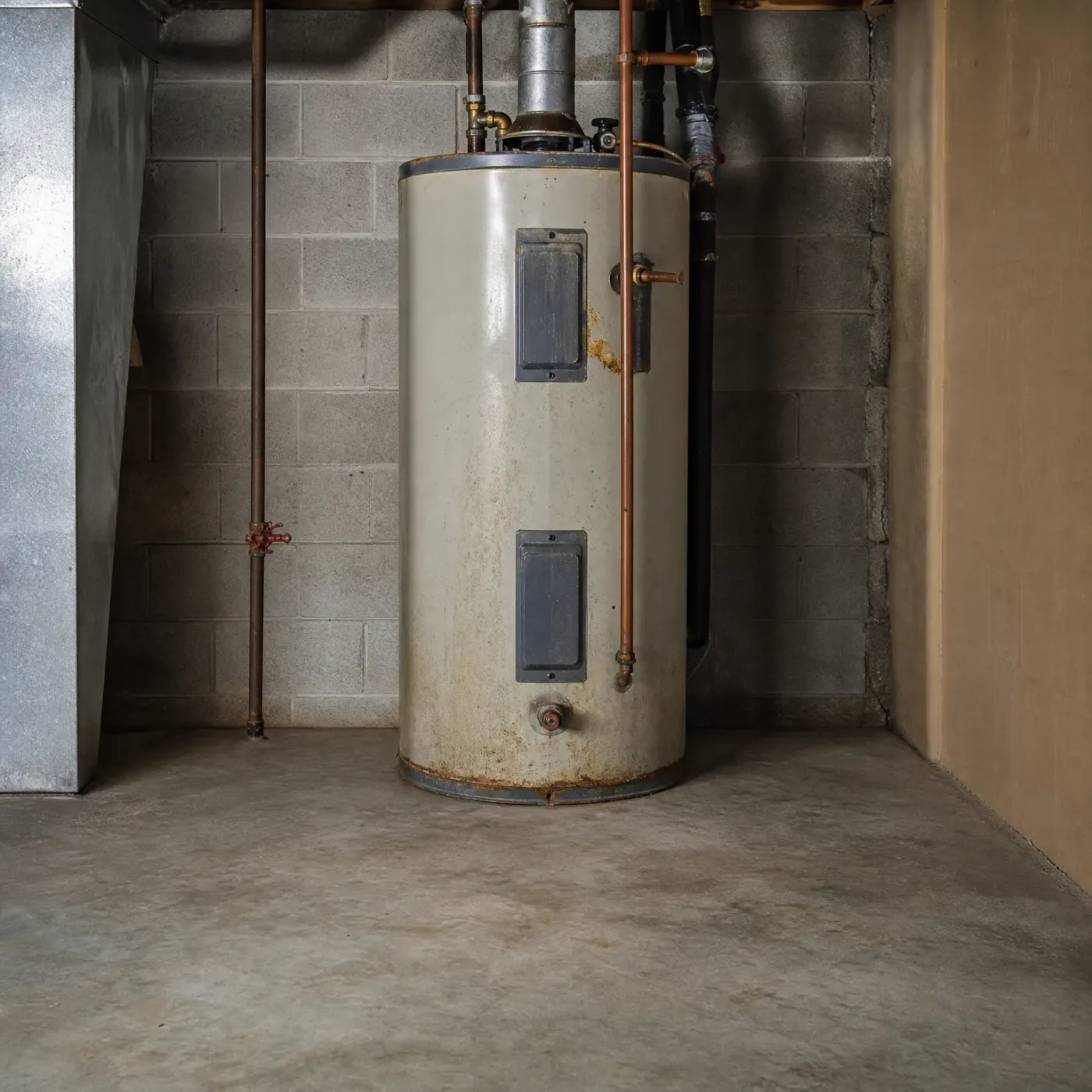
Rust spreading across the tank's exterior like this usually means the steel underneath is going too. Add in an aging flue pipe and worn access panels, and you're looking at a unit closer to the end of its life than the start.
That 44.1% is most likely your house. If your water heater is electric because the furnace is too, a new one goes in the same spot on the same circuit, no gas line to add.
ACS 2020-2024 5-year B25040



If your house heats with electricity and has no gas line to the meter, staying electric keeps the job simple: same spot, same circuit, no new venting to figure out. If gas is already run to your house, a gas water heater costs less to run month to month, even with power rates what they are in Maryland. Either way, the install itself is straightforward once you know which one you're working with.
A local contractor who installs water heaters all year has likely done this exact job on a house like yours, electric swapped for electric or a new gas line run where there wasn't one before. You'll be matched with one contractor, licensed to work in Maryland, who can look at what you have and tell you what fits. No crowd of companies calling, just the one who handles it.






The pro who reaches out is licensed in Maryland.
You're not committing to anything by asking.